
These Lizards Have Green Blood, at a Level That Would Kill a Person
A group of skinks in New Guinea runs on blood tinted bright green by a waste pigment. Their measured levels are the highest recorded in any animal, far past a level recorded in a human patient who died.
Key points
- Cut one of these lizards and the blood runs green.
- The pigment is biliverdin.
- The measured numbers are stark.
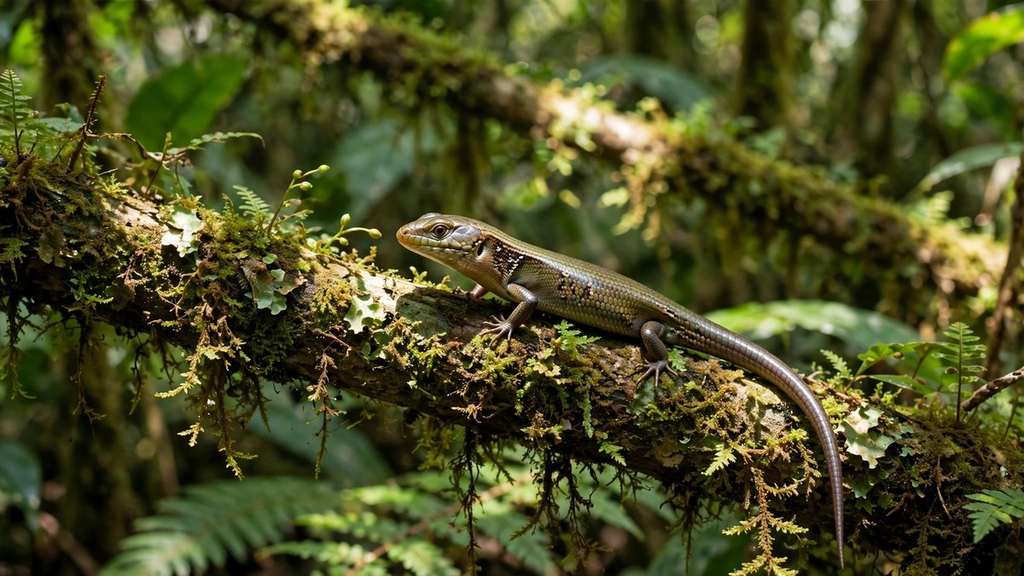
Cut one of these lizards and the blood runs green. So do its muscles, its bones and its tongue. The skinks of the genus Prasinohaema live in New Guinea, and their name is Greek for green blood. They still make red blood cells and hemoglobin, the protein that carries oxygen in the blood. The green pigment floats in the liquid part of the blood in such quantity that it buries the red.
A waste product that never leaves
The pigment is biliverdin. Every vertebrate makes it. When old red blood cells break down, the heme in hemoglobin is split apart, and biliverdin is one of the products. In people, biliverdin quickly converts to a yellow pigment called bilirubin and leaves the body with bile. It stays at levels too low to notice. In these skinks it builds up and stays up, and the lizards show no sign of the jaundice that high bile pigment causes in other animals.
The measured numbers are stark. The 2018 study in Science Advances reports biliverdin in the skinks' circulation at 714 to 1,020 micromoles per liter. The same paper notes the highest level it could cite in a human: 50 micromoles per liter, in a patient who died. Bile pigments are toxic at high levels, harmful to cells and to nerves. The researchers describe the skink levels as the highest concentration of biliverdin recorded for any animal, paired with an evolved resistance to its effects.
Green blood evolved four times
Scientists grouped five described species into Prasinohaema on blood color alone, although the lizards differ in shape and habits. For the 2018 study, researchers sampled 51 skink species and 119 individual lizards, including 27 green blooded ones. Six species in the sample had green blood, two of them not yet formally described. Family tree analysis says the green blooded lizards are not each other's closest relatives. The best supported reconstruction is that green blood evolved independently four times, each time from a red blooded ancestor.
Why keep a poison in your blood? Nobody knows yet, and the paper says so plainly. The leading idea involves parasites. A related pigment, bilirubin, is known to be toxic to the parasites that cause malaria in people, and malaria parasites also infect lizards. Ongoing work tests whether the green pigment fights those parasites in the skinks. A second idea rests on laboratory evidence that bile pigments can act as antioxidants, mopping up free radicals. Neither idea is proven in these lizards.
For now the fact stands on its own. An animal can live its whole life flooded with a pigment that would kill most vertebrates, and evolution found that trick four separate times.