
Rio Tinto Funds 28 Million Dollar Cane Toad Containment Zone to Protect the Pilbara
A 7,500 square kilometre dry corridor south of Broome aims to stop cane toads before they reach 27 million hectares of habitat in Western Australia.
Key points
- Rio Tinto and its Rhodes Ridge Joint Venture partners will spend 28 million Australian dollars, about 20 million US dollars, over five years to stop the cane toad invasion before it reaches the…
- The funding, split equally between Rio Tinto and the joint venture, pays for a Toad Containment Zone of 7,500 square kilometres between the Indian Ocean and the Great Sandy Desert, south of Broome.
- Early work on the zone is underway and the project is scheduled to begin in 2027.
Rio Tinto and its Rhodes Ridge Joint Venture partners will spend 28 million Australian dollars, about 20 million US dollars, over five years to stop the cane toad invasion before it reaches the Pilbara region of Western Australia.
The funding, split equally between Rio Tinto and the joint venture, pays for a Toad Containment Zone of 7,500 square kilometres between the Indian Ocean and the Great Sandy Desert, south of Broome. The zone is designed as a dry corridor that the toads cannot cross.
Water points are the weak spot
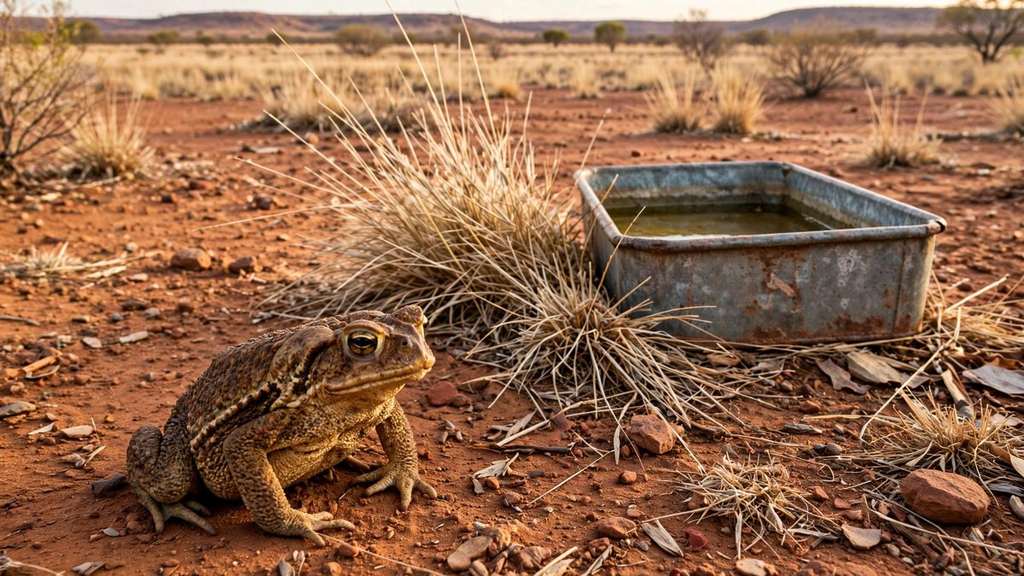
Early work on the zone is underway and the project is scheduled to begin in 2027. The plan will modify or contain 685 water infrastructure items across six pastoral stations, closing off the water points that would otherwise let toads survive the dry country and keep moving west.
The aim is to protect about 27 million hectares of habitat where an estimated 25 native species could be significantly affected by the invasion, including the northern quoll and the ghost bat.
What the scientists say
The Times reported that the money will be spent in partnership with scientists at Curtin University. Ben Phillips, a professor at Curtin University, said: "The toad containment zone is a once in a lifetime opportunity to stop one of the world's worst invasive species in its tracks and protect the region's unique wildlife."
The Times also reported that hundreds of millions of toads are on track to arrive in Broome within two years and at the Pilbara mines by 2045. Rio Tinto operates 18 mines in the Pilbara.
The stakes
Rio Tinto holds a 50 percent stake in the Rhodes Ridge Joint Venture, alongside Mitsui with 40 percent and AMB Holdings with 10 percent.
The Australian government estimates that invasive species, including cane toads, feral camels and cats, cost the country about 25 billion Australian dollars a year. The containment zone is an attempt to keep one of the most damaging of those species out of a region it has not yet reached, by holding a line of dry ground south of Broome before the main wave arrives.
How the line is meant to hold
The geography is the plan. The containment zone stretches across 7,500 square kilometres of country between the Indian Ocean and the Great Sandy Desert, south of Broome, where dry ground does most of the work. The 685 water infrastructure items across the six pastoral stations are the points where that dry ground can fail, because a toad that finds water can survive and keep moving. Modifying or containing those points is how the corridor stays dry in practice, not just on a map. The five year funding window covers the work, with early work already underway ahead of the scheduled start in 2027.