
Bruce Power Faces Fisheries Act Charges After Millions of Fish Died at Lake Huron Plant
Two federal Fisheries Act charges follow the February and March 2025 gizzard shad kill, estimated at 3.3 to 4.3 million fish. Bruce Power appears in Ontario provincial court on November 24, 2026.
Key points
- Bruce Power faces two charges under Canada's federal Fisheries Act after millions of fish died at its nuclear plant on Lake Huron in early 2025.
- Federal estimates cited in CBC reporting put the toll at 3.3 to 4.3 million fish.
- The fish kill ran through February and March 2025.
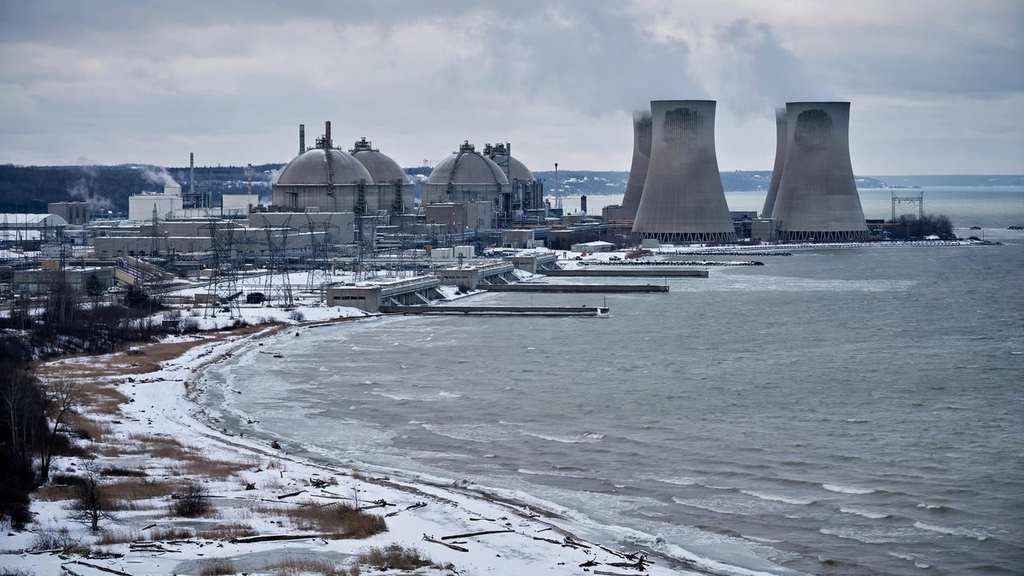
Bruce Power faces two charges under Canada's federal Fisheries Act after millions of fish died at its nuclear plant on Lake Huron in early 2025. The company confirmed it has been formally notified of the two charges, which are tied to the gizzard shad event at the Bruce Nuclear Generating Station near Tiverton, Ontario.
Federal estimates cited in CBC reporting put the toll at 3.3 to 4.3 million fish. That figure is more than 200 times the company's annual limit, and it far exceeds the previous site record of about 800,000 fish, set in 1977.
What happened in 2025
The fish kill ran through February and March 2025. Gizzard shad are cold-sensitive. During a cold spell, large numbers of the fish gathered in the plant's warm-water thermal discharge, where the water stays warmer than the lake around it.
The fish then became trapped against the plant's intake screens in huge numbers. As the screens clogged, one reactor was shut down and a second reactor was reduced in power. The station has eight reactors in total.
Records obtained by CBC tell the same story from the regulator's side. Canada's nuclear regulator described an uncharacterized and unanticipated volume of gizzard shad that overwhelmed the plant's fish-exclusion defences. CBC obtained more than 1,200 pages of federal and provincial records on the event.
Bruce Power's own root-cause work reached a hard conclusion. The company called the event an organizational failure to adapt to the impacts of climate change.
Why it matters
The Bruce station is not a small plant on a quiet shore. It supplies close to 30 percent of Ontario's electricity, so a problem that forces reactors down carries weight for the whole provincial grid.
The scale of the kill also matters. A toll in the millions, against an annual limit the count passed by more than 200 times, raises direct questions about how the plant watches fish movements, how its screens and barriers hold up in extreme cold, and how fast it can react when fish gather in the discharge.
The charges now move those questions into a courtroom. Bruce Power's director of corporate communications, Megan Adams, told CBC by email that the matter is before the courts and the company cannot comment on how it intends to plead.
The context
The plant sits about 190 km southwest of Toronto, on the Lake Huron shore. Bruce Power is the private operator of the station.
The Saugeen Ojibway Nation, the First Nation beside the plant, gave the first public estimates of the kill. In March 2025 it put the toll at 3.5 to 4.5 million dead fish. The Nation has argued that the warm outflow works as a fish trap, drawing fish in during cold weather and holding them near the intakes.
Bruce Power says it has spent more than 10 million Canadian dollars on fixes since the event. The work includes better barrier nets, acoustic deterrents, sonar, sound and light techniques, and AI monitoring of fish movements.
What happens next
The company appears in Ontario provincial court on November 24, 2026. That first appearance will start the court process on the two Fisheries Act charges.
Fines could reach 200,000 Canadian dollars. Any money paid would go to the Environmental Damages Fund.
Readers should watch two things from here. The first is the plea and any court findings on what failed in February and March 2025. The second is whether the new nets, deterrents and monitoring hold through the next cold spell on Lake Huron.
Key numbers
- Fish killed: an estimated 3.3 to 4.3 million, by Fisheries and Oceans Canada estimates cited by CBC
- Annual limit: the toll was more than 200 times the company's annual limit
- Previous record: about 800,000 fish, set at the site in 1977
- Reactors: eight at the station; one shut down and a second reduced in power during the event
- Power share: close to 30 percent of Ontario's electricity
- Fixes: more than 10 million Canadian dollars spent by Bruce Power
- Possible fines: up to 200,000 Canadian dollars, paid to the Environmental Damages Fund
- Court date: November 24, 2026, in Ontario provincial court
Timeline
- Feb-Mar 2025Millions of gizzard shad die at the Bruce Nuclear Generating Station after gathering in the warm-water discharge and becoming trapped against intake screens during a cold spell.
- Mar 2025The Saugeen Ojibway Nation gives the first public estimates, putting the toll at 3.5 to 4.5 million dead fish.
- Nov 3, 2026Two Fisheries Act charges against Bruce Power tied to the 2025 fish kill are reported, with the company confirming formal notification.
- Nov 24, 2026Bruce Power is scheduled to appear in Ontario provincial court.