
Midterm Election Results Tonight: When Polls Close and What to Watch
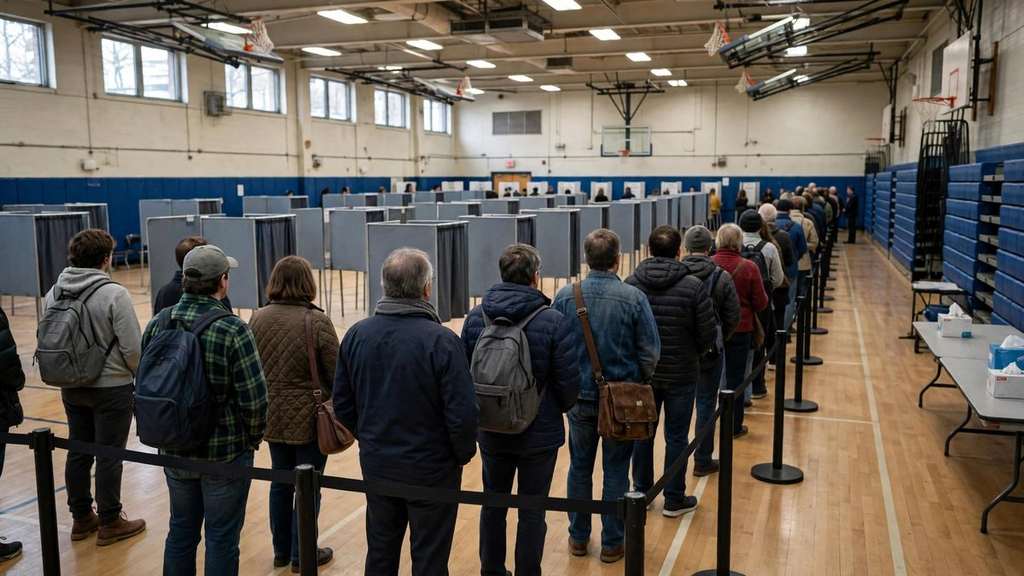
The first midterm results start after polls close at 6 p.m. ET in parts of Indiana and Kentucky on Tuesday, November 3, 2026. Control of Congress will turn on a small set of close Senate races and on how fast House results build through the night.
Key points
- Midterm election results tonight start coming in at 6 p.m. Eastern Time, when the first polls close in parts of Indiana and Kentucky.
- What decides control of Congress is simple on paper.
- The closing schedule sets the pace of the night.
Midterm election results tonight start coming in at 6 p.m. Eastern Time, when the first polls close in parts of Indiana and Kentucky. Results then arrive in waves as polls close state by state, with the last polls closing at 1 a.m. Eastern Time in Alaska. No results exist yet, and no race can be called before those first closings.
What decides control of Congress is simple on paper. All 435 House seats, 35 Senate seats and 36 governorships are on the ballot on Tuesday, November 3, 2026. Voters will choose who holds the House and the Senate for the rest of Donald Trump's presidency, and a handful of close Senate races will likely decide the Senate.
When the results start coming in
The closing schedule sets the pace of the night. After Indiana and Kentucky at 6 p.m. Eastern Time, polls close at 7 p.m. in Georgia, South Carolina, Vermont, Virginia and most of Florida. North Carolina, Ohio and West Virginia close at 7:30 p.m. Pennsylvania, the Florida panhandle, New Jersey and Illinois close at 8 p.m.
The next wave is larger. Arizona, Michigan, Wisconsin, Texas and New York close at 9 p.m. Eastern Time. Alaska closes last, at 1 a.m. Eastern Time. Anyone who is in line at closing time can still vote.
Early results need care. The first numbers from a state often come from places that count fast, not from a full cross section of voters. A lead in the first hour can shrink or grow as cities, suburbs and rural counties report at different speeds and as mail ballots are added.
Why it matters
Control of Congress shapes what Trump can pass, what investigations the House opens, and which nominations the Senate confirms. A change in either chamber changes the rest of his presidency, even though the presidency itself is not on the ballot.
Voters named prices first. A Reuters and Ipsos poll of 1,765 adults, published on November 3, found that 48 percent of registered voters named cost of living as their top issue. Democratic norms ranked second at 26 percent, and immigration ranked third at 13 percent.
The poll also measured the vote as a judgment on Trump. Among those voting, 48 percent said their ballot was a vote against Trump, and 25 percent said it was a vote for him. In the same poll, 49 percent said their household finances had worsened since January 2025.
The races that decide it
Pre-election roundups put the toss-up core of the Senate fight in five states. In North Carolina, Cooper faces Whatley. In the Ohio special election, Brown faces Husted. In Michigan, El-Sayed faces Rogers. In Iowa, Turek faces Hinson. In Texas, Talarico faces Paxton.
North Carolina reports early, because its polls close at 7:30 p.m. Eastern Time. Ohio reports in the same early window. Michigan, Texas and the later states extend the fight deeper into the night, so the Senate picture may stay unclear long after the first House results point in a direction.
One concrete delay already stands out. In Westchester County, New York, a ballot scanner programming error forced tens of thousands of ballots into emergency bags, to be counted after polls close. Lohud reported on November 3 that more than 57,000 votes could not be scanned immediately, according to the county executive. Officials said unofficial results in the county might not be available until Wednesday at the earliest. That delay includes the closely watched NY-17 House race between Mike Lawler and Cait Conley.
Markets will react in real time overnight. The US stock market held regular hours on Election Day and closed at 4 p.m. Eastern Time. Stock index futures reopen at 6 p.m. Eastern Time, right as the first polls close, so early results will meet live prices through the night.
What happens next
House control can often be projected on election night, once enough districts have reported to show a clear path. Senate control may take longer. It may wait on a small number of close states and on mail ballots counted after Election Day in some states.
Readers should watch three things as the night runs. First, watch whether early Senate results in North Carolina and Ohio match the toss-up rating those races carried into the day. Second, watch the size of the margins, not only who leads, because close margins slow projections. Third, watch for counting delays like the one in Westchester County, where a local problem can hold up a House race that national watchers want to call.
Key numbers
All 435 House seats are on the ballot, along with 35 Senate seats and 36 governorships. The first polls close at 6 p.m. Eastern Time and the last at 1 a.m. Eastern Time in Alaska. In the Reuters and Ipsos poll, cost of living led at 48 percent, ahead of democratic norms at 26 percent and immigration at 13 percent. Votes against Trump stood at 48 percent, against 25 percent for votes for him. More than 57,000 ballots in Westchester County could not be scanned immediately and will be counted after polls close.
Timeline
- Nov 3, 2026Polls close from 6 p.m. Eastern Time in parts of Indiana and Kentucky, with the last polls closing at 1 a.m. Eastern Time in Alaska.
- Nov 3, 2026The Reuters and Ipsos poll of 1,765 adults is published, with cost of living named as the top issue by 48 percent of registered voters.