
Why Rain Smells Earthy: The Soil Molecule Your Nose Detects at Parts Per Trillion
The smell after rain on dry ground has a name, petrichor. It comes from plant oils and a bacteria molecule called geosmin, and light rain launches both into the air on tiny bursting bubbles.
Key points
- Your nose can detect the main molecule in the smell of rain at less than 10 parts per trillion.
- The smell itself is called petrichor.
- Geosmin comes from a group of soil bacteria called actinomycetes, including the genus Streptomyces.
Your nose can detect the main molecule in the smell of rain at less than 10 parts per trillion. The American Chemical Society puts that sensitivity at about a teaspoon of the molecule spread through 200 Olympic size swimming pools. The molecule is geosmin, its name built from Greek words for earth and smell, and soil bacteria make it.
A word built from stone and myth
The smell itself is called petrichor. Two Australian scientists, Isabel Joy Bear and R. G. Thomas, coined the word in a 1964 paper in the journal Nature. They built it from petra, the Greek word for stone, and ichor, the fluid said to flow in the veins of the gods. Bear and Thomas extracted a yellowish oil from dry rocks, clay and soil. The oil held fatty acids from plants, which break down in soil into smaller and smellier molecules. Plants release these oils during dry weather, and the oils collect in soil and rock pores while the ground waits for rain.
The bacteria half of the smell
Geosmin comes from a group of soil bacteria called actinomycetes, including the genus Streptomyces. The same molecule gives beetroot its earthy taste and turned earth its deep soil smell after digging. Nobody needs much of it. Human noses pick up geosmin at concentrations under 10 parts per trillion, one of the lowest thresholds for any natural odor. That sensitivity makes practical sense for an animal that needs water. A nose tuned to the smell of wet soil is a nose tuned to a sign that rain has reached the ground nearby.
Rain launches the smell on bubbles
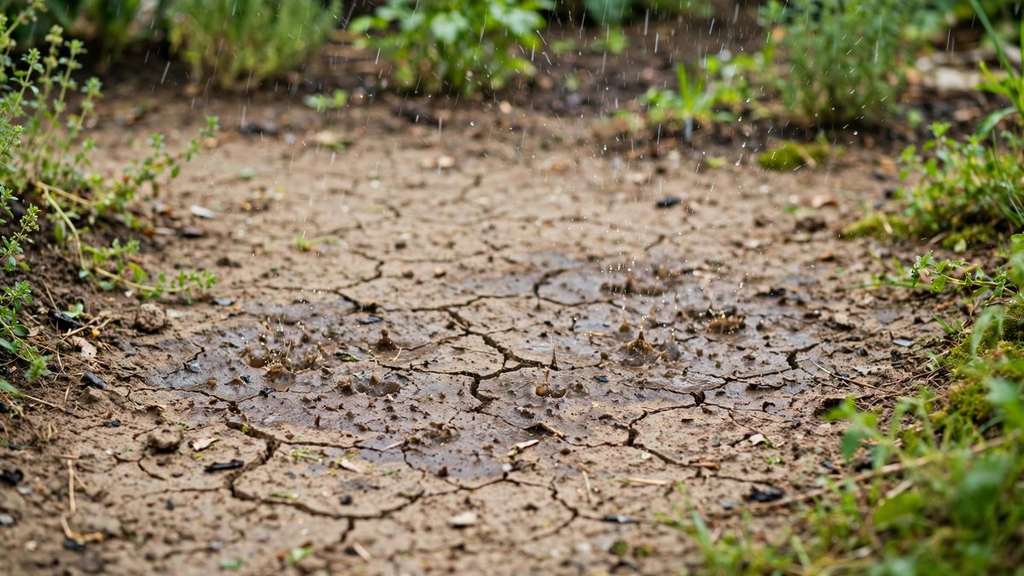
For decades, scientists knew the ingredients but not the delivery system. In 2015, researchers at MIT filmed raindrops hitting porous surfaces with high speed cameras, running about 600 experiments on 28 different surfaces. A drop that lands on soil traps tiny pockets of air from the pores below it. The bubbles rise through the drop and burst at its surface, and each burst throws a fine spray of aerosols into the air. The aerosols carry geosmin, plant oils and even soil microbes up to nose height. Slower, lighter rain makes more aerosols than a heavy downpour, which is why the first light shower after a dry spell smells strongest. A hard storm partly washes the scent away instead of launching it.
The sharp smell before a storm is different
People sometimes report a sharp, clean smell just before rain arrives. That note is usually ozone, carried down from higher air or formed when lightning splits oxygen molecules, which then recombine in threes. Ozone smells metallic and electric. Petrichor smells earthy and sweet. The two often arrive minutes apart, so the nose reads them as one event, but they come from different chemistry in different places.
So the smell of rain is really the smell of dry ground, released. Bacteria and plants load the soil during the dry weeks. The first drops then act like tiny launch pads, popping bubbles that carry the whole stored scent into the air at once.