
Saturn's Rings May Be Younger Than the Dinosaurs
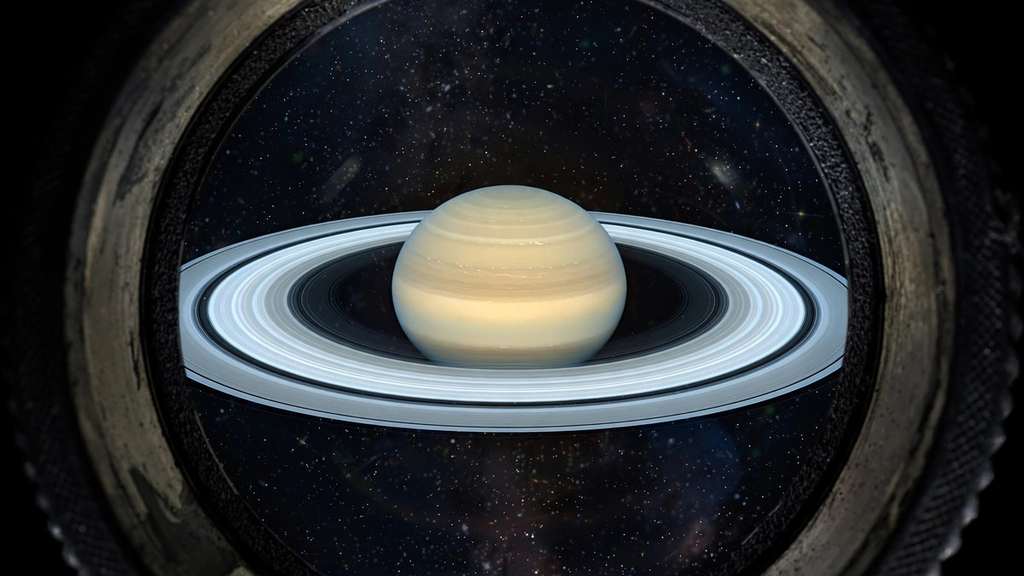
Cassini weighed Saturn's rings in 2017 and found them light and bright. NASA puts their age at 10 million to 100 million years, against a planet that is 4.5 billion years old.
Key points
- Saturn may have spent most of its life with no rings at all.
- The evidence comes from NASA's Cassini spacecraft, which orbited Saturn for 13 years.
- The analysis, led by Luciano Iess of Sapienza University of Rome and published in Science in January 2019, found the rings weigh far less than older estimates suggested.
Saturn may have spent most of its life with no rings at all. The planet formed about 4.5 billion years ago. Its famous halo, according to the best reading of the data, could be younger than the dinosaurs.
The evidence comes from NASA's Cassini spacecraft, which orbited Saturn for 13 years. In 2017, as the mission ran out of fuel, controllers sent Cassini on 22 dives through the gap between the planet and its rings. Those close passes let the spacecraft feel the pull of the rings themselves, and that pull revealed their mass.
A light halo means a young halo
The analysis, led by Luciano Iess of Sapienza University of Rome and published in Science in January 2019, found the rings weigh far less than older estimates suggested. That matters because of dirt. The rings are bright and made mostly of water ice. Space is full of dark interplanetary debris, and debris settles. A ring system that had circled Saturn for billions of years would have collected far more of it and darkened. The rings are still bright, so they cannot have been collecting dust for very long.
Set the mass and the brightness together, and the team put the age of the rings between 10 million and 100 million years. NASA summed it up simply: from Earth's point of view, the rings may have formed during the age of dinosaurs. For most of Earth's history, and for nearly all of Saturn's, the night sky's most famous planet wore no halo at all.
Where did they come from?
A young age narrows the suspects. NASA notes that the evidence lends weight to ideas in which a comet wandered too close to Saturn and was torn apart by its gravity, or an event broke up an earlier generation of icy moons. Either way, the raw material was ice rich and the timing was recent on a cosmic clock.
Cornell University astronomer Phil Nicholson, a co-author on the study, told Futurity that the team suspected the rings were young before Cassini's final orbits, but not everyone was convinced. The new gravity data settled the argument in a way distant telescope views never could, because Cassini passed inside the rings and measured them directly.
Cassini's mission ended in September 2017, when the spacecraft was sent into Saturn's atmosphere so it could never crash into and contaminate one of the planet's moons. The ring result was among its last gifts, delivered from data gathered in its final months.
A lesson in how space changes
The bigger lesson is that even the most familiar sights in the solar system can be temporary. Saturn's rings look eternal in every textbook picture. The data says they are a recent feature, and studies of material raining from the rings into the planet suggest they will not last forever either. Dinosaurs, if any of them ever looked up with better eyes, may have been among the first Earth animals to live under a ringed Saturn.