
New York City, New York: Voters Approve All Five COGE Ballot Proposals
New Yorkers passed all five charter changes from Mayor Zohran Mamdani's Commission on Government Efficiency on Tuesday, covering outdoor dining permits, city contracts, street safety projects, building permits and a 12 percent rainy day savings goal.
Key points
- New York City voters approved all five ballot proposals from the Commission on Government Efficiency on Tuesday, giving Mayor Zohran Mamdani the full set of charter changes his administration put…
- The 15 member commission, known as COGE, was convened by Mamdani in May 2026 after he dissolved the charter commission left by former Mayor Eric Adams.
- Proposal 1 covers outdoor dining and public space.
New York City voters approved all five ballot proposals from the Commission on Government Efficiency on Tuesday, giving Mayor Zohran Mamdani the full set of charter changes his administration put on the ballot. The proposals rewrite pieces of the City Charter on public space permits, city contracts, street projects, building permits and emergency savings.
The 15 member commission, known as COGE, was convened by Mamdani in May 2026 after he dissolved the charter commission left by former Mayor Eric Adams. The commission approved its five questions unanimously on July 23, 2026. Mamdani said he voted yes on all five and praised the result in a statement on Tuesday night, saying New Yorkers had voted for a government that moves as fast as they do.
What each proposal does
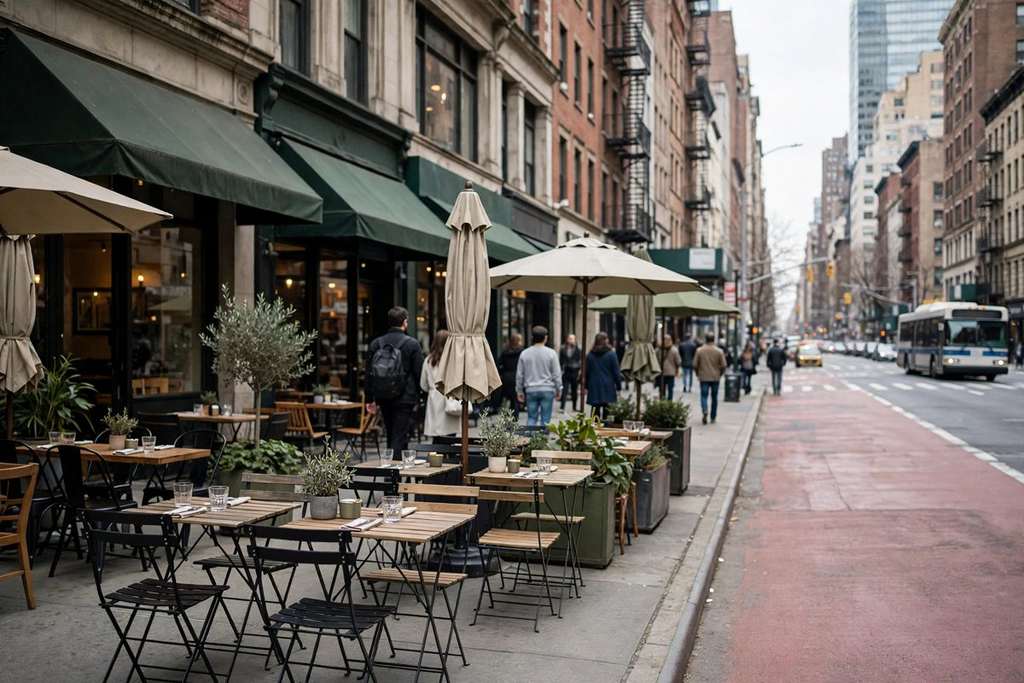
Proposal 1 covers outdoor dining and public space. It makes public hearings optional for permits covering sidewalk cafes, ramps and other uses of public space, and it removes the City Council's ability to veto sidewalk cafes. Local officials instead get 15 days to comment. It passed with more than 63 percent of the vote at roughly 89 percent reporting, according to the New York Post.
Proposal 2 covers city contracts. Contracting officials can change contractor questionnaires, the city's contracting policy board must meet every three months, and some mayoral approvals can be handled by agency staff. The change also ends a public hearing on agencies' social service contracting plans, and starting in 2030 the board could adjust the 100,000 dollar cutoff that decides which contracts require public comment. It passed with more than 61 percent yes at roughly 89 percent reporting.
Proposal 3 covers streets, city property and offices. The Department of Transportation can start projects such as bike and bus lanes before presenting them to local community boards when its commissioner decides there is a risk of significant injury, and it must make best efforts to notify local officials. The proposal also moves final approval of some city property sales and leases from the Council to the City Planning Commission. It passed with nearly 62 percent approval and more than 90 percent reporting.
Proposal 4 creates one online place to apply for building permits from different city agencies. Waterfront construction oversight moves from Small Business Services to the Department of Buildings, and more deputy and borough commissioners can approve building paperwork. It passed with roughly 68 percent of the vote. Proposal 5 sets a reserve goal of at least 12 percent of the previous year's tax revenue for the rainy day fund or other reserves. Deposits follow a written formula, but the change does not guarantee the savings. It passed with 72.3 percent of the vote.
The argument against
Neighborhood groups opposed the package, saying the changes cut public participation. The United Neighbors of Prospect and Crown Heights said it could not support charter changes that restrict or block public participation, and Brooklyn for All of Us raised the same objection. Bronx Councilman Eric Dinowitz opposed Proposal 3, saying communities deserve a voice in changes to their neighborhoods. Council Member Frank Morano of Staten Island urged voters to reject Proposals 1, 2 and 3. Watchdog groups split, with the Citizens Budget Commission backing Proposals 1, 3 and 4 and opposing Proposal 5.
His promotion of the measures also drew scrutiny: his videos ran on LinkNYC kiosks in a 1.6 million dollar campaign that Councilman Phil Wong wants investigated, and City Hall called it voter education. With all five measures passed, the work now shifts to the agencies that have to run the new rules.
Timeline
- May 2026Mayor Zohran Mamdani convenes the 15 member Commission on Government Efficiency, known as COGE, to review the City Charter.
- Jul 23, 2026COGE approves its final report and five proposed charter amendments unanimously, sending all five questions to the citywide ballot.
- Nov 3, 2026New York City voters approve all five COGE ballot proposals, with yes shares from about 61 percent to 72.3 percent in the counts reported on election night.
Sources
- Reason: New York Voters Say Yes to Mamdani Administration's 'COGE' Recommendations
- New York Post: Big Apple voters approved all five ballot proposals, what they mean for NYers
- Ballotpedia News: New York City voters to decide five charter amendments on permitting, contracting, and other government processes on Nov. 3