
MSCI Consults on Downgrading Indonesia From Emerging Market to Standalone Status
MSCI has opened a consultation on moving Indonesia out of its emerging market indexes into standalone status, a step it says fits the scale of the problems investors report there. Feedback runs to April 30, 2027, with a final decision due by June 30, 2027.
Key points
- Jakarta moved to calm the rout on Monday.
- Exchange leaders will hold an online meeting with MSCI later on Monday to seek clarification on the downgrade warning, Hendrik told reporters.
- The selling reached the currency and bond markets.
Updated 06:43 UTC
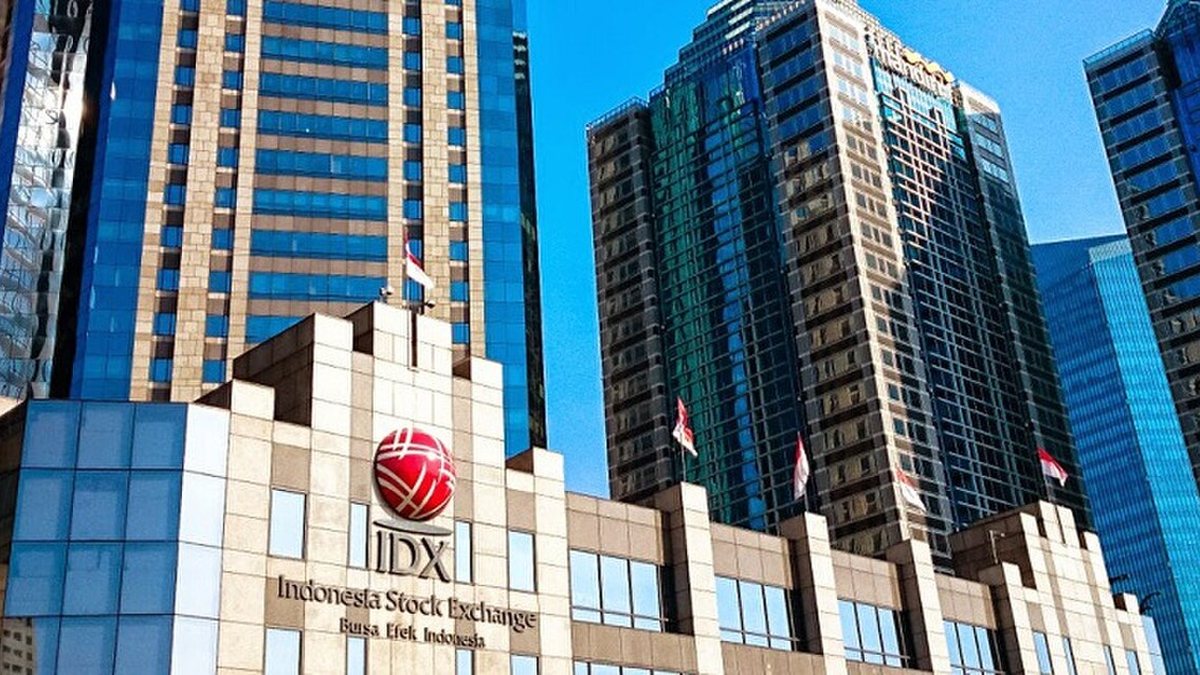
Jakarta moved to calm the rout on Monday. The Indonesia Stock Exchange halved the daily down limit on stock prices to 7 percent, from 15 percent for shares priced above 10 rupiah, and said the tighter limit runs through December 31, 2026, with support from the Financial Services Authority, Asia Daily reported from the exchange decree. Chief executive Jeffrey Hendrik said the move was an effective way to reduce volatility, Reuters reported.
Exchange leaders will hold an online meeting with MSCI later on Monday to seek clarification on the downgrade warning, Hendrik told reporters. He said the exchange, the Financial Services Authority and most MSCI participants did not expect the announcement. In a separate statement, the exchange said the MSCI announcement was unexpected and caused a market panic, Reuters reported.
The selling reached the currency and bond markets. The rupiah weakened to 18,040 per dollar, close to the record low of 18,190 hit in June, and the 10 year government bond yield rose to 7.4 percent from 7.169 percent on Friday, traders told Reuters. President Prabowo Subianto is expected to meet top financial officials on Monday afternoon to discuss the current economic condition, two government sources told Reuters. The meeting is set to include the sovereign wealth fund Danantara and the Financial System Stability Committee, which brings together the finance minister, the Bank Indonesia governor and the heads of the Financial Services Authority and the Indonesia Deposit Insurance Corp, the sources said.
Updated 04:02 UTC
Jakarta losses deepened on Monday, Oct 19. The Jakarta Composite Index plunged more than 5 percent on Monday to its lowest level since early October 2020, CNBC reported, extending the 11.6 percent fall on Friday. Reuters also reported on Monday that Indonesian equities extended their losses to a six year low and that the rupiah weakened marginally.
Goldman Sachs said in a Sunday note that a full removal from the MSCI emerging market indexes could trigger about 5.6 billion dollars in passive outflows, equal to 18 days of average daily trading volume for the stocks in the MSCI Indonesia Investable Market Index, CNBC reported. Another 2.7 billion dollars could be at risk if FTSE Russell later took similar action, which Goldman said would be a separate scenario. Active funds benchmarked to the MSCI and FTSE indexes hold more than 8 billion dollars in Indonesian equities, but any selling by those funds would be their own choice, not automatic. Goldman kept its underweight rating on Indonesian equities, citing index uncertainty, weak company earnings and wider economic headwinds, and said valuations have fallen a lot but remain above past trough levels.
Reuters reported that foreign investors have net sold 4.88 billion dollars of Indonesian stocks so far in 2026, on track for the biggest annual outflow in at least 16 years. The rupiah traded near 18,000 per dollar, close to the record low of 18,190 hit in June. One investor quoted by Reuters warned that the bigger risk was not the index selling itself, but spillover into the rupiah and local bond yields, which could tighten financial conditions for the wider economy.
Updated 16:18 UTC
Jakarta closed the week with its worst day in almost three decades. The Jakarta Composite Index ended Friday, Oct 16, down 11.6 percent, its biggest one day fall since January 1998, Reuters reported. The selloff wiped about 65 billion dollars off the value of Indonesian shares. The rupiah fell as much as 0.8 percent in the session. Some analysts told Reuters the pressure on the currency could push the central bank toward an interest rate rise at its meeting on Tuesday, Oct 20, when rates had been expected to stay on hold. Indonesia has been an MSCI emerging market since 1989.
Updated 08:21 UTC
Jakarta's fall reached a six year low on Friday, Oct 16, Reuters reported. UBS estimated that a move to standalone status could set off about 4 billion dollars in passive outflows, with active investors possibly adding a further 15 billion dollars in selling. Foreign investors have already net sold 4.7 billion dollars of Indonesian stocks in 2026, Reuters reported.
Indonesia's senior economic minister Airlangga Hartarto questioned why MSCI had not raised standalone status at a meeting with officials in Bangkok this week, Reuters reported. Indonesia's weight in the MSCI emerging market index had already fallen to 0.4 percent at the end of September, from 1.16 percent at the start of the year.
Later on Friday, Indonesia's financial regulator said the stock exchange and regulators had fined three listed firms as part of the country's market reforms, Reuters reported. Barito Renewables Energy and Dian Swastatika Sentosa were each fined 27.8 million dollars, and Petrindo Jaya was fined 5.6 million dollars.
Updated 03:35 UTC
Jakarta stocks plunged on Friday, Oct 16, after the MSCI consultation became a market rout. The benchmark index fell 8 percent at the open, which set off a 30 minute trading halt, Reuters reported. Losses deepened after trading resumed, to 11.21 percent at 02:33 GMT, on course for the steepest one day drop since January 1998. The index is now down 39.79 percent this year, the worst record in the region.
The rupiah fell 0.75 percent to 18,070 per dollar, its lowest level since early August and close to its lifetime low of 18,190, Reuters reported. The rest of Asia moved the other way in the same snapshot. South Korean stocks rose 3.14 percent and Japanese stocks rose 1.47 percent at 02:33 GMT, after heavy losses on Thursday. Analysts told Reuters that investors who track the indexes may have to cut their holdings in Indonesia, and that pressure on the currency could force the central bank to watch the market more closely and step in if selling grows.
CNBC also reported the 8 percent early fall in Jakarta on Friday. The fall does not change the consultation dates below. It shows the cost investors now put on the warning.
NEW YORK. MSCI has launched a consultation on a proposal to reclassify the MSCI Indonesia Indexes from Emerging Market to Standalone Market status. The index provider announced the step on Thursday, Oct 15, and said Indonesia's continued place in the emerging market group is no longer appropriate.
MSCI said it expects to proceed with the reclassification unless the consultation produces clear evidence of material improvements in how the Indonesian market is governed and how it works. Standalone status is reserved for markets that do not meet the tests for either the emerging market or the frontier market groups. Bloomberg reported that Argentina, Lebanon and Palestine hold that status today, with no market in Asia in the group.
What investors told MSCI
Market participants raised persistent problems with the Indonesian market. They pointed to shareholding structures that are hard to see into, holdings concentrated in few hands, and suspected coordinated trading. MSCI said those problems limit the ability of investors to judge the true free float of Indonesian stocks and to trust market prices when they build portfolios and copy indexes. Participants also reported continued market dysfunction and a lack of evidence that rules are enforced in a meaningful way.
Indonesia has announced reforms since those warnings. They include disclosure of shareholders who own more than 1 percent, fuller disclosure of investor types, reporting on high shareholding concentration, and a roadmap toward a minimum free float of 15 percent. MSCI said investors have yet to see consistent evidence that the measures have changed how the market works in practice.
MSCI also said feedback from participants pointed the other way on one choice. A move down to Frontier Markets, participants said, would not properly recognize the depth of the problems in Indonesia. That is why the proposal on the table is Standalone, a harsher landing than frontier status.
A long slide, and a freeze that stays
The consultation lands on a market already under heavy pressure. Bloomberg reported that Indonesia's benchmark stock index has fallen about 32 percent in 2026, the worst performance among global peers. An MSCI warning in January of a possible downgrade to frontier status set off a historic rout in Jakarta at the time. For the largest economy in Southeast Asia, ejection from the emerging market indexes would threaten further foreign investor flight, Bloomberg reported.
The existing freeze on Indonesian securities stays in place until further notice, MSCI said. The provider will not raise Foreign Inclusion Factors or share counts, will not add stocks to the MSCI Indonesia Investable Market Index, and will not move Indonesian stocks up across its size segment indexes. It will keep deleting securities named by the Indonesian authorities under the high shareholding concentration framework, and it will keep using the 1 percent shareholder disclosure data to adjust free float estimates.
Dates to watch
The consultation follows the MSCI 2026 Market Classification Review, published on June 23, 2026. In that review MSCI said it would consider this consultation if progress was not evident by the November 2026 Index Review. Market participants have now told MSCI that sufficient progress has not been seen across the market.
Investors can send feedback until April 30, 2027. MSCI will announce its final decision on or before June 30, 2027, and it may publish an interim update on the feedback during the consultation.
Timeline
- Oct 19, 2026The Indonesia Stock Exchange halves the daily down limit to 7 percent, says it will meet MSCI later in the day, and President Prabowo is expected to meet top financial officials as the rupiah weakens to 18,040 per dollar.
- Oct 19, 2026The Jakarta Composite Index plunges more than 5 percent on Monday to its lowest level since early October 2020, extending Friday's 11.6 percent fall. Goldman Sachs estimates a full MSCI removal could trigger about 5.6 billion dollars in passive outflows.
- Jun 23, 2026The MSCI 2026 Market Classification Review warns that a consultation on reclassifying Indonesia will be considered if progress is not evident by the November 2026 Index Review.
- Oct 15, 2026MSCI launches the consultation on moving Indonesia to Standalone Market status and says it expects to proceed unless clear evidence of material improvement appears.
- Oct 16, 2026Jakarta benchmark falls 8 percent at the open, trading halts for 30 minutes, and losses reach 11.21 percent at 02:33 GMT, on course for the steepest one day drop since January 1998. The rupiah eases to 18,070 per dollar.
- Oct 16, 2026The Jakarta Composite closes down 11.6 percent, its biggest one day fall since January 1998, and the MSCI announcement wipes about 65 billion dollars off Indonesian equities.
- Apr 30, 2027Deadline for market participants to send feedback on the proposal.
- Jun 30, 2027MSCI will announce its final decision on or before this date.
Sources
- Reuters: MSCI weighs downgrading Indonesia to standalone-market status
- Bloomberg via Live Mint: MSCI weighs downgrade of Indonesia to remove from global indexes
- MSCI via Business Wire: MSCI launches a consultation on a proposal to reclassify Indonesia from Emerging Market to Standalone Market status
- Reuters: Jakarta stocks plunge 11% as MSCI set to drop Indonesia from indexes
- Reuters: Most Asian stocks rise as calm returns after CoreWeave shock; Indonesia faces market downgrade
- Reuters: Investors see outflow and FX risks as MSCI moves to downgrade Indonesia
- Reuters: Indonesia gets a wake-up call as MSCI prepares to expel it from global indexes
- Reuters: MSCI, its classifications and what they mean
- Reuters: Indonesia regulator announces sanctions against 3 listed firms
- Reuters: Indonesia faces rare MSCI exclusion that could cut it off from global capital
- Reuters: Frail Indonesian markets reel after MSCI shock warning
- Reuters via TradingView: Indonesian stocks extend rout on fears of MSCI index exclusion
- CNBC: Indonesian stocks plunge to six-year low as MSCI downgrade fears mount
- Reuters: Indonesia stock exchange to meet MSCI on Monday, seeking clarification on downgrade warning
- Reuters via SRN News: 'Panic' selling hits Indonesian markets on MSCI expulsion threat
- Asia Daily: Indonesia cuts share price fall limit to 7 percent as stocks slide