
Maha Ashtami 2026: Devotees Throng Goddess Shrines in Nepal
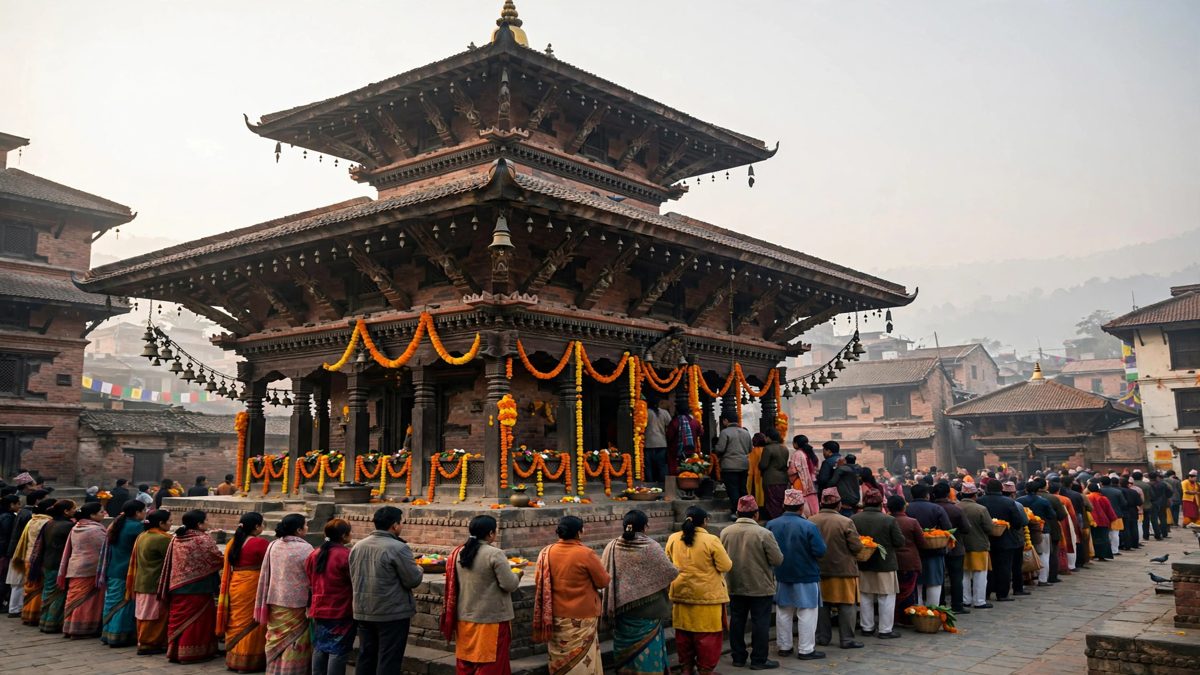
Devotees packed Goddess shrines across Nepal, including Kathmandu Valley, from early Sunday for Maha Ashtami, the eighth day of Bada Dashain, with special worship at Maitidevi Temple.
Key points
- Devotees thronged Goddess shrines and temples across Nepal, including in Kathmandu Valley, on Sunday, October 18, for Maha Ashtami, the eighth day of Bada Dashain, The Rising Nepal reported.
- At Maitidevi Temple in Kathmandu, a large number of devotees gathered from early Sunday morning to offer prayers for Maha Ashtami, Himalini reported.
- Special worship rituals dedicated to Durga Bhawani were performed at Maitidevi.
Devotees thronged Goddess shrines and temples across Nepal, including in Kathmandu Valley, on Sunday, October 18, for Maha Ashtami, the eighth day of Bada Dashain, The Rising Nepal reported.
At Maitidevi Temple in Kathmandu, a large number of devotees gathered from early Sunday morning to offer prayers for Maha Ashtami, Himalini reported. Devotees visited the temple to worship Goddess Durga and to seek blessings for happiness, peace, prosperity and the well being of their families.
Special worship rituals dedicated to Durga Bhawani were performed at Maitidevi. Traditional religious ceremonies and animal sacrifice rituals, observed as part of Maha Ashtami, also marked the occasion.
The eighth day
Maha Ashtami holds a central place in Dashain, Nepal's biggest Hindu festival. Devotees across the country visit temples and Shakti Peethas, the shrines of the Goddess, to offer prayers and take part in traditional rituals, Himalini reported.
Sunday's worship comes a day after Phulpati, the seventh day of Dashain, when sacred plants were brought into homes and temples across the country and the festival holiday began for government offices and schools. The main day of the festival, Vijaya Dashami, falls on Wednesday, October 21, when elders place tika and jamara on younger family members.
For families who left Kathmandu this week to reach home villages, and for Nepalis abroad following the festival from a distance, Maha Ashtami is one of the most crowded temple mornings of the year.
Why the eighth day matters
Dashain celebrates the victory of the goddess Durga over the demon Mahishasura, a story of good defeating evil that sits at the centre of the festival. Each day of Dashain honours the goddess in a different form, and the eighth day, Maha Ashtami, is one of the most intense days of worship in the whole festival. Devotees fast, carry offerings of flowers and fruit to the shrines, and queue from before dawn at the Shakti Peethas, the seats of the goddess, which include well known Kathmandu Valley temples such as Maitidevi.
Animal sacrifice, reported at Maitidevi and other temples on Sunday, is part of the traditional observance for many families on Maha Ashtami, offered to the goddess in her fierce forms. Not every family takes part, and practice varies by region and household, but the temple courtyards on Ashtami morning are among the busiest of the year, with worship, offerings and ritual running side by side.
What comes next in the festival
The festival continues on Monday with Maha Navami, the ninth day, and then reaches its main day, Vijaya Dashami, on Wednesday, October 21, when elders place tika and jamara on younger family members and give blessings for the year ahead. Tika gatherings then continue in many families through the remaining days of the festival.
Dashain runs for fifteen days in total, and the days after Vijaya Dashami are when the festival turns from temple worship to family visits, with younger relatives travelling to the homes of elders to receive tika. For the devotees who filled the shrines on Sunday morning, Maha Ashtami was the high point of the worship side of the festival, before the family side takes over later in the week.