
Delhi Pollution Curbs Start Today: Old Vehicles Barred, Offices at Half Staff
From today to January 31, non BS-VI vehicles registered outside Delhi cannot enter the capital, offices run at half attendance, fuel requires a valid PUC certificate, and parking charges double.
Key points
- Delhi woke up on Sunday, November 1, under a new set of winter pollution rules that will run for three months, and the rules reach into almost every commute, office, and building site in the…
- IANS reported on Sunday that the restrictions came into effect as part of the government effort to tackle rising winter pollution, and that Delhi Chief Minister Rekha Gupta had appealed on…
- The entry ban covers petrol and diesel vehicles registered outside Delhi that fall below BS-VI, including vehicles at BS-IV or older standards.
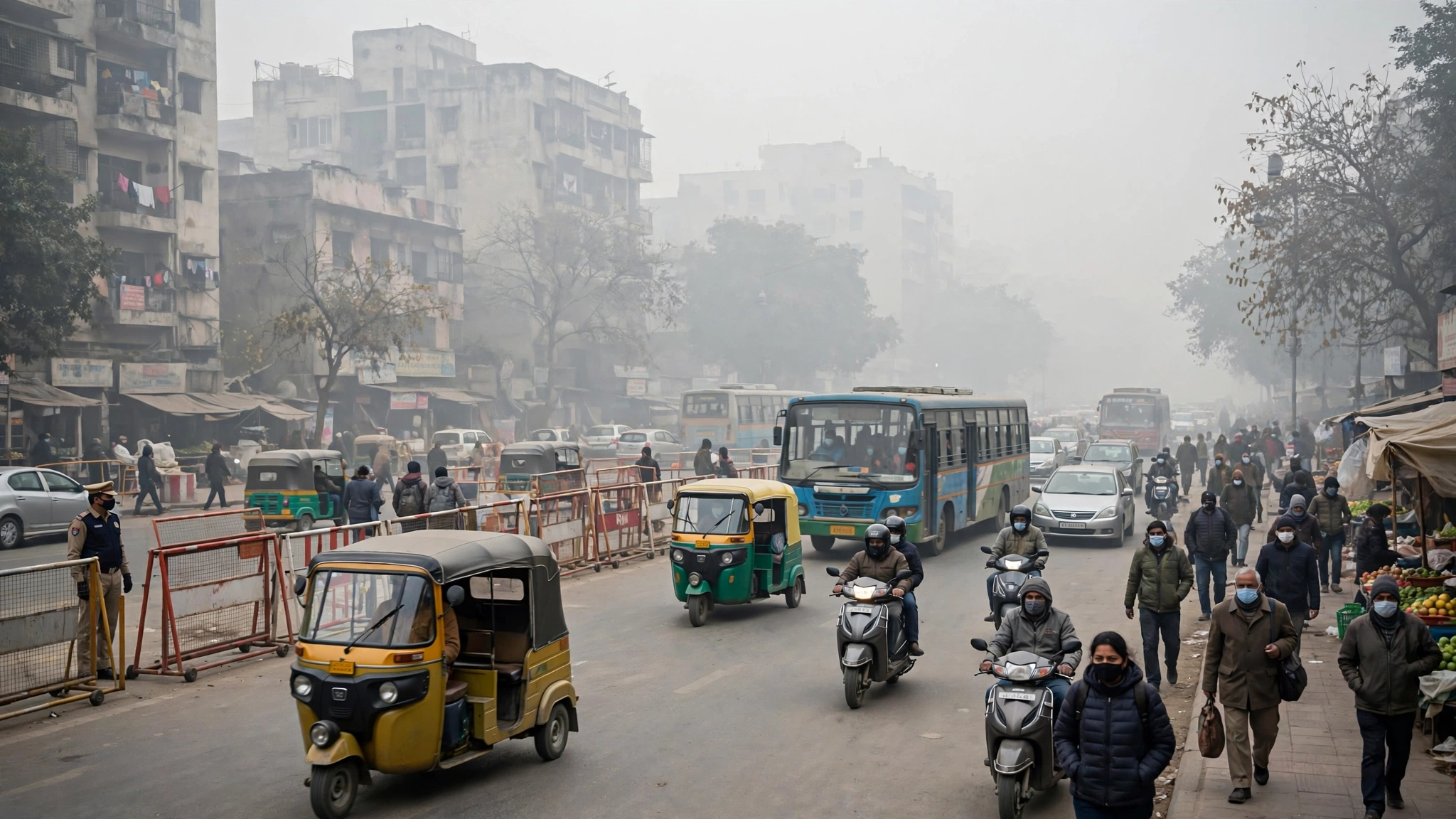
Delhi woke up on Sunday, November 1, under a new set of winter pollution rules that will run for three months, and the rules reach into almost every commute, office, and building site in the Indian capital. Vehicles registered outside Delhi that do not meet BS-VI emission standards are barred from entering the city from November 1 to January 31, 2027. Government and private offices have been directed to run at 50 percent physical attendance, with the rest of their staff working from home. And at fuel stations across the city, a vehicle without a valid Pollution Under Control certificate does not get fuel.
IANS reported on Sunday that the restrictions came into effect as part of the government effort to tackle rising winter pollution, and that Delhi Chief Minister Rekha Gupta had appealed on Saturday to citizens, vehicle owners, construction agencies, institutions, resident welfare associations and commercial establishments to follow the rules. The Environment Department said enforcement teams will be deployed and violations monitored through ANPR cameras and the AI enabled Integrated Command and Control Centre.
The rules, one by one
The entry ban covers petrol and diesel vehicles registered outside Delhi that fall below BS-VI, including vehicles at BS-IV or older standards. CNG and electric vehicles are exempt, along with ambulances, fire tenders, police vehicles and other notified essential vehicles. Northeast Herald reported the ban is expected to affect nearly 10 lakh, or one million, older petrol and diesel vehicles that travel into Delhi from neighbouring cities including Noida, Gurugram, Faridabad and Ghaziabad. Interstate buses that do not meet BS-VI standards also face denial of entry, Jagran reported.
The no PUC, no fuel rule ties refuelling to a valid Pollution Under Control certificate. Curly Tales, citing NDTV, reported that around 500 petrol pumps have been equipped with Automatic Number Plate Recognition cameras to identify vehicles without valid certificates, and that the rule covers petrol, diesel and CNG.
Parking charges at authorised parking facilities across Delhi are doubled from November 1, 2026 to February 28, 2027. All dust generating demolition and outdoor civil construction activity is banned from November 1 to January 31, with essential public infrastructure projects exempt under conditions.
Offices and hours
Until January 31, government and private offices are to keep physical attendance at a maximum of 50 percent of staff, with the rest working from home. Essential and emergency services are exempt. Municipal Corporation of Delhi offices will operate from 8:30 a.m. to 5 p.m., while Delhi government offices will function between 10 a.m. and 6:30 p.m., a staggered schedule meant to spread the rush hour load.
Key numbers
- Entry ban period: November 1, 2026 to January 31, 2027
- Older outside vehicles affected: nearly 10 lakh, per Northeast Herald reporting of the government order
- Office attendance cap: 50 percent physical, rest work from home
- Fuel stations with ANPR cameras: around 500, per NDTV reporting
- Doubled parking charges: November 1, 2026 to February 28, 2027
- Construction and demolition ban: November 1 to January 31
Why it matters
Delhi winter air is a yearly public health emergency, driven by vehicle emissions, construction dust, and weather that traps pollution over the city. This package aims at the two sources the government can reach fastest: what drives into the city, and how much dust building sites raise. For the hundreds of thousands who commute in from the National Capital Region, the rule that bites first is the entry ban: a BS-IV car that was legal on the road last week is now turned back at the border, and a lapsed PUC certificate now stops a fuel purchase, not just risks a fine.
What happens next
Enforcement is the open question. The Environment Department says recorded violations, challans and action at construction sites will be monitored centrally through the command centre. Offices have to reorganise rosters for three months, and commuters from Noida, Gurugram, Faridabad and Ghaziabad have to decide whether their vehicles pass the BS-VI test or whether they switch to public transport, CNG, or electric options for the winter.
Timeline
- Oct 31, 2026Delhi Chief Minister Rekha Gupta appeals to citizens and agencies to follow the pollution restrictions starting Sunday.
- Nov 1, 2026The curbs take effect: entry ban on non BS-VI outside vehicles, 50 percent office attendance, no PUC no fuel, doubled parking charges, construction ban.
- Jan 31, 2027The entry ban, work from home direction and construction ban are scheduled to end; doubled parking runs to February 28.
Sources
- The Freedom Press (IANS): Delhi pollution curbs come into effect, old vehicle ban, 50 pc WFH from today
- Northeast Herald: Delhi's winter pollution war: Non-BS6 vehicles banned, 50% WFH from November 1
- The Daily Jagran: Delhi Pollution Curbs From Nov 1
- Curly Tales, citing NDTV: Delhi Winter Pollution Curbs