
US Raises Kenya Travel Advisory to Level 3 as Ebola Cases Hit Eight
The State Department moved Kenya from Level 2 to Level 3 on Oct. 19, citing health risks as Kenya confirmed an eighth Ebola case and traced 130 contacts.
Key points
- Kenya has recorded a second death from Ebola.
- The United States raised its travel advisory for Kenya to Level 3 on Oct. 19, 2026, telling Americans to reconsider travel as the country confirmed its eighth Ebola case.
- Kenya confirmed its eighth Ebola case on Sunday.
Updated 07:17 UTC, Oct 24, 2026
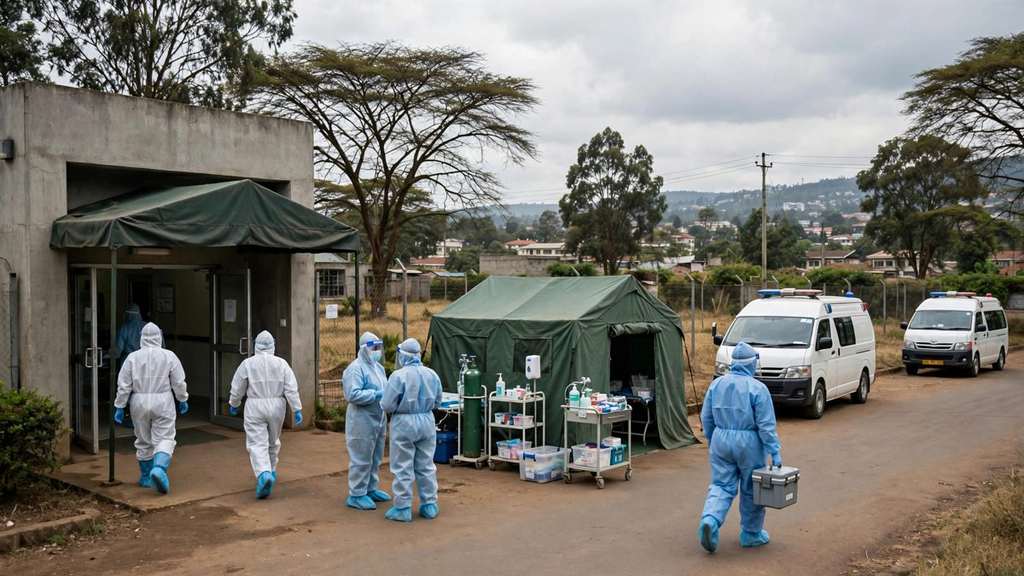
Kenya has recorded a second death from Ebola. The health ministry said late on Friday, October 23 that a 65 year old woman had died early that evening while receiving supportive care at an infectious disease unit. She was the country's third confirmed case, a close relative and a direct contact of the first patient, and she had developed symptoms on October 13 while already in quarantine, according to the ministry statement reported by Kenyan outlets. Her death takes Kenya to nine confirmed cases and two deaths, up from the eight cases and one death reported when this article was first published. The remaining seven patients are receiving care in two isolation facilities. Authorities have traced 135 contacts, all of whom were placed in quarantine, and the ministry said there is no evidence of community spread. Trained teams will carry out her burial under public health protocols, in consultation with her family.
The United States raised its travel advisory for Kenya to Level 3 on Oct. 19, 2026, telling Americans to reconsider travel as the country confirmed its eighth Ebola case. The State Department moved Kenya from Level 2, exercise increased caution, to Level 3, reconsider travel. The U.S. Embassy in Kenya said the level changed due to health risks, and the advisory also cited crime, kidnapping, terrorism, unrest and road safety.
Eighth case confirmed on Sunday
Kenya confirmed its eighth Ebola case on Sunday. The patient is a 49 year old attendant who had attended the first patient. Health Director General Patrick Amoth said 38 people were tested on Sunday and one tested positive for the Bundibugyo strain.
The first case was a man who had lived in the Democratic Republic of Congo, travelled through Uganda and died in Nairobi on Oct. 5, 2026. His death was announced on Oct. 6, 2026. Later cases include relatives of the first patient and health workers who had contact with patients.
Seven other patients were in quarantine and stable, according to reports on the outbreak. Officials identified 130 contacts, and 128 had been traced and quarantined. The World Health Organization said there was no evidence of wider community transmission, and contacts were under daily monitoring.
What Level 3 means for travelers
Level 3 is the second highest level in the U.S. system. It does not ban travel, but it tells Americans to reconsider a trip and to weigh the risks before they go. Some areas of Kenya are at Level 4, do not travel, including the Eastleigh and Kibera neighborhoods of Nairobi, according to Dawan Africa.
The Centers for Disease Control and Prevention issued a Travel Health Notice for Ebola Bundibugyo virus disease in Kenya. Travelers who do go are told to follow health guidance, watch for symptoms and seek care fast if they feel ill after contact with a sick person or after travel in an affected area.
Officials say public risk stays low
Kenya's Health Ministry said the overall public risk remains low and that no wider community transmission has been detected. That message sits next to the higher U.S. warning. The warning reflects risk for visitors who may not know local health routes, while Kenyan officials point to contact tracing and quarantine as the tools holding the outbreak to a known chain.
For now, the count stands at eight confirmed cases. Health teams continue to test contacts and monitor people in quarantine each day. Any new case from outside the known contacts would change the picture, and officials have not reported one. Travelers with trips planned in the coming weeks face a choice shaped by both messages: a formal U.S. call to reconsider, and a Kenyan statement that the wider public risk is still low.
Timeline
- Oct 5, 2026First Ebola patient dies in Nairobi after living in the Democratic Republic of Congo and travelling through Uganda.
- Oct 6, 2026Death of the first patient is announced.
- Oct 19, 2026US State Department raises Kenya travel advisory from Level 2 to Level 3, reconsider travel.
- Oct 23, 2026Kenya's health ministry confirms a second Ebola death, a 65 year old relative of the first patient, taking the country to nine confirmed cases and two deaths.
Sources
- News Central TV: Ebola, US raises Kenya travel warning
- Nipashe Biz: Kenya travel advisory upgraded as Ebola cases rise to eight
- Dawan Africa: US urges Americans to reconsider travel to Kenya over Ebola risks
- Reuters: Kenya reports second death from Ebola
- AnewZ: Kenya records second Ebola death as outbreak spreads