
Phulpati 2026 in Nepal: 7:37 AM Sait, Gorkha Procession, Tika Date
Phulpati falls on Saturday, October 17, with the auspicious time to bring the sacred plants home set at 7:37 a.m. Offices close, the Gorkha procession reaches Hanuman Dhoka, and Tika is set for October 21 at 10:26 a.m.
Key points
- Nepal marks Phulpati today, Saturday, October 17, the seventh day of Dashain.
- Phulpati is an offering of flowers, leaves and fruits gathered from nine kinds of plants, presented to the goddess Durga.
- Dashain began on Sunday, October 11 with Ghatasthapana, when families cleaned the prayer room, set up a kalash pot and sowed barley and maize seeds in sand to grow the jamara used on tika day.
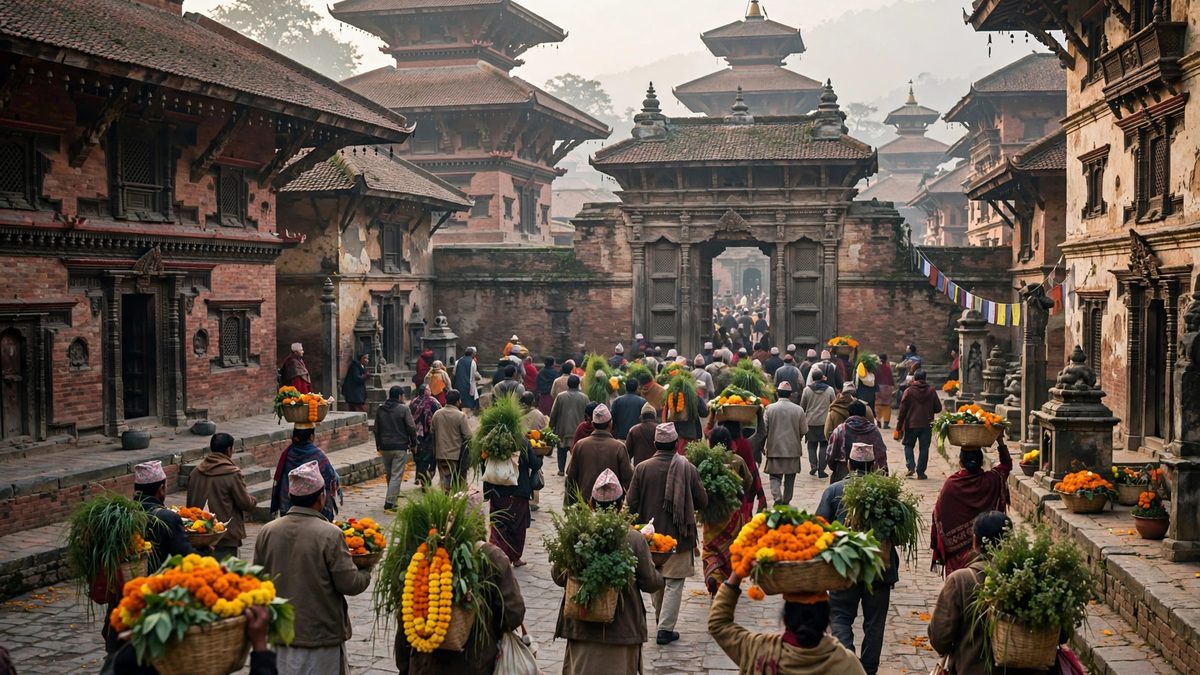
Nepal marks Phulpati today, Saturday, October 17, the seventh day of Dashain. Families bring sacred plants into their homes and place them in the prayer room, and the auspicious time set by the Nepal Panchanga Nirnayak Development Committee for bringing Phulpati in this year is 7:37 a.m.
Phulpati is an offering of flowers, leaves and fruits gathered from nine kinds of plants, presented to the goddess Durga. The word itself joins the Nepali words for flower and plant. Households worship the offering as a sign of the goddess arriving in the home, and pray for health and prosperity through the rest of the festival. The items brought in include jamara, the barley and maize shoots grown since the first day, belpatra leaves, banana stalks and sugarcane tied with red cloth, according to festival guides covering this year's Dashain.
Where the festival stands today
Dashain began on Sunday, October 11 with Ghatasthapana, when families cleaned the prayer room, set up a kalash pot and sowed barley and maize seeds in sand to grow the jamara used on tika day. The committee set the auspicious time for Ghatasthapana at 11:47 a.m. The nine nights of Navaratri that follow are given to the goddess in her nine forms, from Shailaputri on the first night through Brahmacharini, Chandraghanta, Kushmanda, Skandamata, Katyayani, Kalaratri and Mahagauri to Siddhidatri, the Himalaya Times reported. Phulpati is the day the festival turns from home worship toward the public ceremonies of the final days, and for many families it is also the deadline to be home.
The Gorkha procession
The best known Phulpati of the day travels. A ceremonial party carries the sacred offering from Gorkha to the Hanuman Dhoka palace in Kathmandu, in a tradition that ties the old royal seat to the capital. Inside Himalayas describes the older form of the journey: Brahmins carried the kalash, banana stalks, jamara and sugar cane from Gorkha, a three-day walk of about 170 kilometres, hundreds of officials gathered at the Tundikhel grounds in formal dress to watch, and the parade went on to Hanuman Dhoka, where the Nepal Army marked the arrival. Since 2008, when the royal family stood down, that 200-year-old arrangement changed and the holy offering goes to the residence of the President, who took over the king's social and religious roles. At Hanuman Dhoka, the Phulpati is still received with ceremony in Durbar Square, while families across the country hold the same ritual at home on a smaller scale.
The holiday begins
Government offices, schools and many businesses close from Phulpati, and the closure runs through the main Dashain days. That is why the roads out of Kathmandu peaked this week. Traffic police counted 348,314 people leaving the Kathmandu Valley between Ghatasthapana and Friday morning, with many more still travelling today to reach home villages before the main days.
The festival shows itself at home too. Houses are cleaned and decorated to welcome the goddess, markets fill with shoppers buying new clothes, gifts and food for family feasts, bamboo swings go up in villages and open ground, and kite flying picks up as a sign that the rains should stay away. For families in remote and poorer areas, Dashain is often the one time of year with new clothes.
What comes next
Maha Ashtami, the eighth day, falls on Sunday, October 18. Maha Navami follows on Tuesday, October 20. The main day, Vijaya Dashami, is Wednesday, October 21, when elders place tika and jamara on younger family members. The committee set the auspicious time for tika at 10:26 a.m., facing west. The festival closes with Kojagrat Purnima on Sunday, October 25.
For the diaspora, today is the call home day of the festival: the day the plants go into the prayer room in the family house, whether the family is in Gorkha, Pokhara, or watching on a phone screen from abroad.
Timeline
- Oct 11, 2026Ghatasthapana opened Dashain 2083, with jamara sown at the auspicious time of 11:47 a.m.
- Oct 17, 2026Phulpati, the seventh day of Dashain. The committee set 7:37 a.m. as the auspicious time to bring Phulpati into the home. Public offices and schools close from today.
- Oct 21, 2026Vijaya Dashami, the main Tika day. The auspicious time for tika is 10:26 a.m.