
Houthis vow more attacks after Aramco HQ hit and missile downed over Riyadh
A ballistic missile was intercepted over Riyadh on Wednesday, October 14. The Houthis claimed Aramco targets in Dhahran and Riyadh, debris injured four people in the capital on Tuesday, and the airport stays shut until October 17.
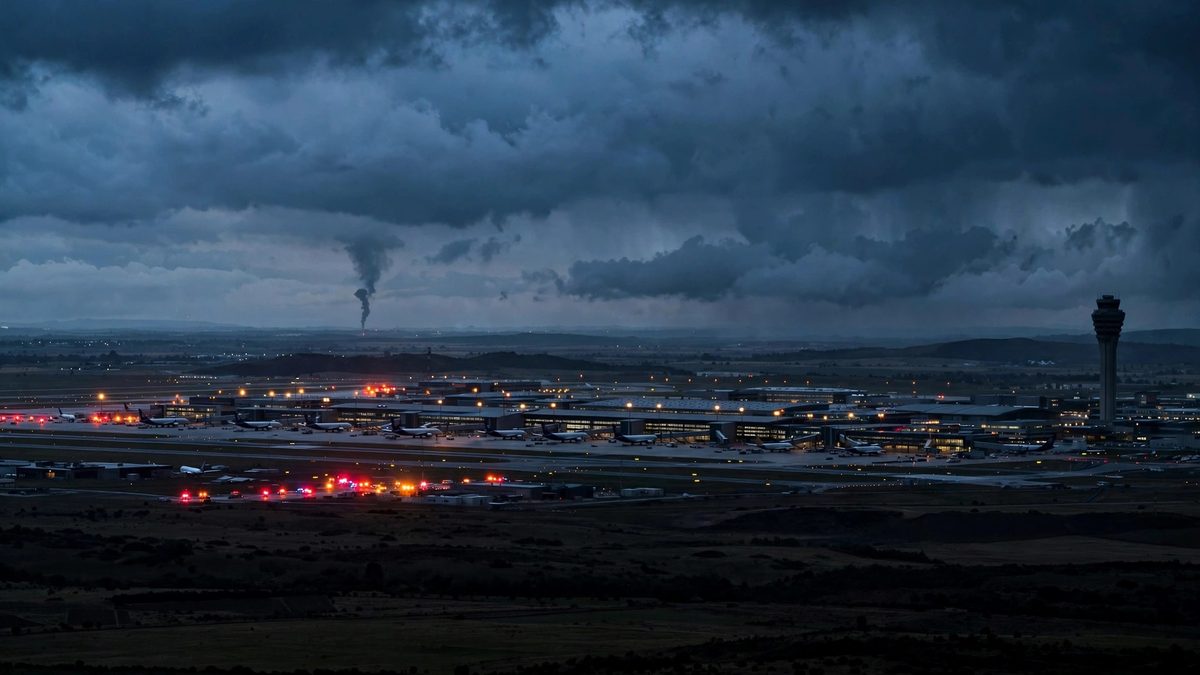
Key points
- **Updated 05:37 UTC.** Explosions were heard over Riyadh on Wednesday, October 14, and the Saudi led coalition said it had intercepted a ballistic missile fired by the Houthis toward the capital.
- The Houthis said on Wednesday they had fired ballistic missiles, cruise missiles and drones at Aramco sites in Dhahran in the east, at King Khalid International Airport in Riyadh and at an Aramco…
- On Tuesday, October 13, an administrative building at the Aramco headquarters complex in Dhahran was hit.
**Updated 05:37 UTC.** Explosions were heard over Riyadh on Wednesday, October 14, and the Saudi led coalition said it had intercepted a ballistic missile fired by the Houthis toward the capital. Saudi authorities had issued an alert for a possible aerial threat earlier in the day before lifting it, Reuters reported.
The Houthis said on Wednesday they had fired ballistic missiles, cruise missiles and drones at Aramco sites in Dhahran in the east, at King Khalid International Airport in Riyadh and at an Aramco refinery in Riyadh. The group said it would keep attacking Saudi airports and oil sites and urged civilians, workers and shipping companies to stay away from them, calling them military targets. The group says the attacks answer Saudi backing for Yemen government forces in a war that restarted last month.
On Tuesday, October 13, an administrative building at the Aramco headquarters complex in Dhahran was hit. The Saudi Energy Ministry said the strike caused a limited fire and no deaths or injuries. A company source told Reuters a missile struck the complex and damaged the top three floors of an office tower. The complex runs a large operations centre for Aramco pipelines, refineries and export terminals.
Also on Tuesday, debris from two intercepted missiles fell in Riyadh, injuring four people and damaging 15 homes, Saudi Civil Defence said in a report carried by the state news agency SPA on Wednesday. Saudi shares fell in early trade on Wednesday, with the benchmark index down 0.7 percent and Aramco down 0.5 percent, Reuters reported.
President Donald Trump has said he is considering whether the United States should join Saudi strikes on the Houthis. A Houthi official warned the group would target United States personnel and interests in the region if Washington intervened, according to CBS News live coverage. Riyadh airport, hit four times in the past week, stays closed until October 17, and airlines have cancelled flights to Saudi Arabia.
This is a developing story and will be updated.
**Updated 06:29 UTC.** Saudi Arabia has opened an investigation into how its air defences failed to stop the attack on Riyadh airport, two regional officials told the Associated Press on Monday. The officials, who spoke without giving their names because they were not authorised to speak publicly, said early findings point to a layered attack. Drones went first. A mix of cruise and ballistic missiles followed toward King Khalid International Airport.
Some of the warheads can change course in flight. That makes them harder for Patriot interceptors to stop, the officials said. Investigators are also asking why the system gave no earlier warning, even though the weapons flew more than 1,000 kilometres to reach the capital. The Saudi government office that handles foreign media did not immediately answer a request for comment, the Associated Press reported. The attack killed at least 13 people and wounded more than 300.
**Updated 04:40 UTC.** The exchange of fire ran into Monday night. Houthi military spokesman Yahya Sarea said the group fired another ballistic missile at King Khalid International Airport on Monday evening and claimed it hit its target. He also said drones struck King Khalid Air Base in Khamis Mushait, in the southwest. The Saudi-led coalition said it intercepted and destroyed a ballistic missile fired toward Riyadh on Monday evening. Explosions were heard in the capital, and residents received alerts on their phones, Xinhua reported.
The Houthis said Saudi Arabia carried out 119 strikes on Houthi-held areas in the 24 hours to Monday. Houthi-run al-Masirah TV said coalition strikes on Al-Jawf province, near the Saudi border, killed at least nine people and wounded seven. The Houthi health ministry said the dead in Al-Jawf included five children and a woman, killed in the Khabb wa ash-Shaaf district. Reuters reported that Saudi airstrikes intensified on Monday, including hits on Al-Jawf. In Sanaa, the Houthi health ministry said airstrikes killed one person and wounded 12, including at a salt factory in the Hamadan district, the Associated Press reported. Majid al-Nuzaili, a spokesman for Yemen's Saudi-backed government forces, claimed 1,879 attacks on Houthi targets and about 950 Houthi fighters killed. Those figures could not be verified.
**Updated 00:32 UTC.**
Saudi Arabia said its air defences intercepted and destroyed three Houthi ballistic missiles on Monday, one over Riyadh and two over Khamis Mushait in the southwest, CNN reported. The Houthis claimed the Monday attacks, said they had targeted King Khalid International Airport and a military base, and renewed their warning to airlines to stay away from Saudi airports, CNN reported. The Saudi-led coalition also reported fresh drone and missile fire on Monday. The New York Post, citing coalition statements, said several attacks were intercepted as they headed toward oil and gas facilities. Reuters reported incoming drones and missiles on Monday, with no immediate word at that point on whether they had been stopped.
The airport stayed shut. Hours before the missile attacks, the Saudi civil aviation authority said King Khalid International Airport would remain closed until further notice while officials completed safety and operational readiness checks, CNN reported. A notice to air missions points to a closure until at least October 17, CNN and Reuters reported. Airlines kept pulling back. Lufthansa Group cancelled all flights to Riyadh until October 16 and Air France-KLM extended its suspension until the end of the month, Reuters reported. Etihad suspended Saudi flights until October 13, IndiGo extended cancellations on Riyadh and Dammam routes until October 15, Philippine Airlines extended its Riyadh suspension until November 29, Gulf Air cancelled Riyadh flights from October 12 to October 17, and Delta said on Monday it would delay its planned Atlanta to Riyadh flight until March 2027, Reuters reported. The US embassy in Riyadh tightened its guidance on Monday, saying US government staff now need special authorization to use any airport in Saudi Arabia and urging Americans to use extreme caution at Saudi airports, CNN reported. The Federal Aviation Administration had told US airlines on Sunday to exercise caution when flying to or over Saudi Arabia, Reuters reported.
Washington still held back. President Donald Trump said on Monday that he had spoken with Saudi Crown Prince Mohammed bin Salman since the Saturday attack, CNN reported. He gave no details of the call. Reuters noted there has been no sign yet of US action against the Houthis. Iran, the Houthis' main backer, put itself forward as a go-between. Foreign Minister Abbas Araghchi told Saudi Foreign Minister Faisal bin Farhan in a phone call on Sunday that Iran was ready to help start dialogue between Saudi Arabia and Yemen, and foreign ministry spokesman Esmaeil Baghaei repeated the offer on Monday, saying Tehran was deeply concerned about events on the Arabian Peninsula, Reuters and IANS reported. Saudi Arabia confirmed the two ministers had spoken by phone, but its account did not mention a mediation offer.
The week's toll kept climbing in the count. Attacks on the airport over the past week have killed at least 20 people and wounded hundreds, CNN reported. Six people died in attacks between Tuesday and Thursday, 13 died on Saturday and one person died on Sunday.
**Updated 12:23 UTC.**
The attacks are now biting the kingdom's economy. Saudi Arabia's benchmark stock index, the TASI, fell 0.6 percent in early Monday trade as investors weighed the fallout, Reuters reported. Al Rajhi Bank dropped 0.6 percent and Saudi Aramco slipped 0.3 percent, while Dubai, Abu Dhabi and Qatar indexes edged higher.
The chief executives of ExxonMobil, TotalEnergies, Shell and BP all withdrew from a long-planned energy conference in Riyadh, two people with knowledge of the matter told the Financial Times, according to Reuters. The five-day WPC Energy Congress had opened on Sunday at a convention centre about 10 km from the targeted airport and went ahead as scheduled, Saudi Arabia's energy ministry said.
The flight chaos kept growing. Nearly 1,500 flights have been cancelled across Saudi Arabia since the attacks began, Gulf Business reported. At Riyadh airport alone, 436 flights were cancelled on Monday, 64 percent of scheduled services, after Sunday's near-total shutdown when 98 percent of flights were grounded, according to Flightradar24 data reviewed by the outlet.
Saudi energy minister Prince Abdulaziz bin Salman said the kingdom's response to the airport attacks would be 'equally serious', Travel Tomorrow reported. UAE presidential adviser Anwar Gargash called for joint Gulf action to preserve the security of all Gulf states.
**Updated 08:25 UTC.**
Four regional powers issued a joint condemnation of the airport attacks on Sunday. Turkey, Pakistan, Egypt and Saudi Arabia, calling themselves the R4, described the strikes as 'a dangerous escalation that cannot be justified or accepted under any pretext' and said they fully support all 'legitimate measures and steps' Saudi Arabia takes to counter them, Reuters reported. The group demanded the Houthis halt the attacks immediately and unconditionally, and said it holds the militia fully accountable for the results.
Turkey and Pakistan signed a joint defence pact with Saudi Arabia in August that treats an attack on one party as an attack on all. Last week the three countries agreed to implement their collective defence commitments, including the rapid deployment of forces and capabilities to the kingdom, Reuters reported. Turkish Foreign Minister Hakan Fidan said Thursday that Ankara was assessing how to help but ruled out troop deployments and offensive operations; officials told Reuters Turkey was sending mainly defensive and technical support. Turkey's parliament has not yet ratified the pact; it is expected to be submitted in the coming days.
Saudi civil defence said emergency alerts were issued in Abha, in the south, early on Monday, but that the danger had since passed. The Saudi-led coalition said air defences intercepted and destroyed a drone in the kingdom's Eastern Province and a ballistic missile launched toward Khamis Mushait.
**Updated 04:57 UTC.**
Saudi Arabia confirmed that a second airport came under attack on Sunday evening. The General Authority of Civil Aviation said King Fahd International Airport in Dammam, in the kingdom's northeast, was struck, and that authorities were assessing the damage and conducting safety inspections, CNN reported. The Times, citing the Saudi aviation authority, reported the same confirmation. The Houthis had claimed to have hit the Dammam airport; the Saudi statement is the first official acknowledgment of that strike.
Trump said Saturday he planned to speak with Saudi Crown Prince Mohammed bin Salman after the airport attack, CNN reported, while Washington weighs whether to join Saudi strikes against the Houthis.
**Updated 01:30 UTC.**
Saturday's death toll rose again. An Indian national wounded in Saturday's strike on King Khalid International Airport died of his injuries on Sunday, bringing the toll from that attack to 13, the Indian embassy in Riyadh said, according to the New York Post.
Sunday's follow-up attack also turned deadly. Saudi Arabia's civil aviation authority said a Pakistani citizen was killed and 11 others were wounded when an unidentified projectile struck Terminal 4 and set it on fire, the Saudi Gazette reported.
The Houthis openly took credit on Sunday. In a televised speech, military spokesman Yahya Saree claimed responsibility for Saturday's airport strike and said the group had also hit the airport in Dammam and two facilities of the state oil company Saudi Aramco. The Aramco claim could not be independently verified.
The United States kept weighing a response. President Donald Trump had said Washington might join Saudi strikes against the Houthis, and Britain warned its citizens against all but essential travel to Jeddah and Dammam and to all Saudi airports except the one in Medina, The Times reported.
**Updated 19:09 UTC.**
Sunday's renewed strike on the airport caused injuries, CNN confirmed, a sign the fight over Saudi airspace is escalating one day after the deadliest airport attack in the kingdom in more than a decade.
The Houthis' military council warned airlines and travelers again on Sunday to keep away from Saudi airports and airspace, saying Saudi Arabia would bear responsibility for any failed interceptions. "We will answer blockades with blockades, and escalation with escalation," the statement said, CNN reported. The Houthi-run foreign ministry added that any further Saudi military action in Yemen would draw a stronger response, warning that "worse is yet to come" unless Saudi Arabia stopped what it called its aggression, according to Houthi-run Al Masirah television.
The UN special envoy for Yemen, Hans Grundberg, called the airport attacks "a grave escalation" and a serious threat to regional security. The US embassy in Riyadh said Sunday it was "deeply saddened" by the deaths in Saturday's strike and wished the wounded a full and swift recovery.
**Updated 16:35 UTC.**
The airport was hit again on Sunday. An unidentified projectile struck Terminal 4 and started a fire, with emergency crews responding, the Saudi-led coalition said, according to the Saudi Press Agency. Coalition spokesman Maj. Gen. Turki Al-Maliki said Saudi air defenses also intercepted and destroyed a cruise missile in the airport's vicinity. It was the second strike on the airport in less than a day after Saturday's deadly attack, and the fourth this week.
A senior Houthi official, Nasr al-Din Amer, appeared to acknowledge responsibility on X, writing: "We shut down Riyadh international airport," CNN reported. AFP said two blasts were heard in the capital on Sunday, though the cause was not immediately clear.
Condemnations kept coming. Israeli Prime Minister Benjamin Netanyahu condemned what he called the "horrific terrorist attack" on the airport on X and offered condolences to the victims' families, The Times reported. The airport stayed closed until at least late Sunday, and CNN reported that more than 600 flights had been cancelled.
**Updated 14:10 UTC.**
New details sharpened the picture of Saturday's strike. Le Monde reported the missile hit the terminal around 3 p.m. local time Saturday, and that a French woman was among the 309 wounded. Passenger video, described by The Times, captured screams and yelling as smoke filled the terminal and ambulances raced to the airport.
The diplomatic fallout kept spreading. The UK Foreign Office now advises against all but essential travel to Riyadh, The Times reported. Defence Secretary Wes Streeting called the strike a "dangerous escalation" but said Britain was not considering offensive operations against the Houthis "at this stage"; the UK already supports Saudi Arabia with defensive air-to-air refuelling. European Commission president Ursula von der Leyen added her condemnation to those of the UN chief and the US secretary of state. Pakistan's prime minister, Shehbaz Sharif, condemned what he called a "heinous" attack and pledged Pakistan's commitment to Saudi sovereignty, Le Monde reported.
The capital stayed on edge, but the energy summit opened as planned. The 25th World Energy Congress began in Riyadh on Sunday; state television said more than 70 ministers, 300 business leaders and representatives of over 25 international energy organizations confirmed they were taking part, according to Le Monde.
**Updated 13:57 UTC.**
The Houthis renewed their warning against using Saudi airports on Sunday. In a post on X, the group told airlines, travelers, and airport workers to stay away from Saudi airports and airspace, calling them "a theatre of operations" for its forces, Reuters reported. Only the airports serving the holy cities of Mecca and Medina were exempt. "We urge everyone to take our warnings seriously, and Saudi Arabia bears responsibility for any failed interceptions," the post said.
The Saudi-led coalition said it intercepted a drone in the region on Sunday, a day after a projectile fell near King Fahd International Airport in Dammam.
Despite the airport closure, the Saudi energy ministry said a long-planned international energy conference was still going ahead in Riyadh on Sunday.
**Updated 08:06 UTC.**
The attacks widened beyond Riyadh. Hours after Saturday's strike on King Khalid International Airport, a projectile landed near King Fahd International Airport in Dammam, in Saudi Arabia's northeast near Bahrain, coalition spokesman Maj. Gen. Turki Al-Maliki said.
The Houthis also warned airlines against using Saudi airspace, declaring it a zone of military operations, CNN reported. Riyadh's airport was expected to remain closed until 9 p.m. local time Sunday, with at least 627 Sunday flights cancelled, according to Flightradar24.
Health officials activated a rare mass call-up of doctors to handle the wounded, who numbered 309, some in critical condition, AFP reported.
**Updated 05:40 UTC.**
Condemnations and the fallout widened on Sunday. UN Secretary-General Antonio Guterres said on X that he was "deeply shocked" by Saturday's attack, which he said killed 12 people and injured hundreds of civilians, adding that attacks on civilians and civilian infrastructure violate international law and "must cease immediately." India's foreign ministry condemned what it called the "dastardly attack" of October 10, called repeated strikes on the airport "completely unacceptable" and said it stands in solidarity with Saudi Arabia in defense of its sovereignty.
The Saudi-led coalition vowed to respond. Spokesman Maj. Gen. Turki al-Malki called the strike on civilian passengers and airport workers a war crime by the Houthi militia and said coalition forces would respond, the Wall Street Journal reported.
The disruption kept spreading. About 580 flights were cancelled on Sunday, according to flight-tracking site Flightradar24, and the United States, Britain, Spain and Canada warned their citizens against using the airport, CNN reported. The Times reported that Lufthansa and Emirates cancelled their Riyadh flights and that schools across the capital were ordered to switch to remote learning for a week.
**Updated 03:17 UTC.**
Washington reacted more sharply overnight. Secretary of State Marco Rubio condemned the strike in a statement, saying the attacks showed "a blatant disregard for innocent civilian life" and "must stop now." President Donald Trump said he plans to speak with Saudi Crown Prince Mohammed bin Salman, according to a CBS News reporter. Trump had said earlier that the United States was weighing whether to join Saudi strikes against the Houthis.
Meanwhile, the head of the Houthi media office said on X that the group had "shut down" the airport, according to Reuters. The airport remained closed and all flights were diverted from the city, the Saudi civil aviation authority said.
**Updated 23:40 UTC.**
The casualty count rose sharply late Saturday. The Saudi civil aviation authority said at least 12 people were dead and 309 wounded, a toll far above the "several" hurt reported in the first hours. The dead include four Saudis, two Bangladeshis, and one person each from the United States, Jordan, Palestine, Syria, Sudan and Egypt. The wounded were carried to hospitals by ambulance and helicopter, some in critical condition, and doctors were called in from other hospitals to handle the surge of patients.
The authority said missiles landed direct hits on Terminals 3 and 4 of King Khalid International Airport. Parts of the roof fell on people inside, and the airport suffered extensive damage. The Wall Street Journal called it the deadliest attack in Saudi Arabia in more than a decade. Saudi Arabia's threat warning system issued no alert ahead of the strike, officials said.
The US embassy in Riyadh strengthened its warning after the toll emerged, strongly recommending that all American citizens avoid the airport and the surrounding areas. Western governments had already told their citizens to stay away from the airport.
A Houthi military spokesman retweeted his own post from before the attack, which said only pre-approved humanitarian flights were allowed to land at Riyadh airport, and added the words: "a reminder." The group did not directly claim the strike. The attack was the third on the airport this week; the strikes earlier in the week left four people dead and heavily damaged a Saudi airliner, according to CNN.
**Updated 19:35 UTC.**
The official casualty count stood at "several" wounded on Saturday evening. Saudi authorities had not confirmed the higher tallies circulating from unnamed hospital sources, which put the number much higher.
Condemnations widened across the region. Egypt's foreign ministry called the attack a violation of international law and declared full solidarity with Saudi Arabia.
The flight disruption also grew through the evening. Kuwait Airways canceled two Riyadh flights, KU775 and KU776, while Etihad Airways and Qatar Airways canceled several more. The European Union Aviation Safety Agency had already broadened its warning against flying over Saudi airspace as Houthi missile and drone attacks escalated.
RIYADH - Saudi Arabia closed its airport in the capital on Saturday after a missile attack struck a passenger terminal and wounded several people, the country's civil aviation authority said.
The General Authority of Civil Aviation said King Khalid International Airport was targeted and that "several" people were hurt. The airport suspended operations while crews assess the damage and inspect facilities, the authority said.
Terminal 3 took a direct hit and was evacuated, Saudi officials told the Wall Street Journal. Ambulances and helicopters rushed the wounded to a hospital in the capital as smoke rose over the airfield. People near the airport reported hearing loud blasts.
A witness described an explosion inside the terminal. One injured traveler told Reuters he saw something fly across the sky outside the airport, then part of the ceiling near a departure gate collapsed.
Flight tracking showed arrivals canceled or diverted. One passenger flying to Riyadh said his plane was sent to Dammam instead, and he continued to the capital by road.
Embassies warn travelers
The United States embassy said it was aware of attacks and told Americans to avoid the airport and the surrounding areas. Canada, Germany, Ireland, and Britain also warned their citizens to stay away, with Canada pointing to military activity disrupting flights.
No claim, but a clear pattern
No group immediately claimed responsibility. The attack landed in the middle of a widening campaign of Houthi missile strikes against Saudi airports, military sites, and oil facilities. The Iran-aligned Yemeni group said this week that Saudi airspace is now part of the battlefield.
The strike followed Thursday's attack on the same airport, which killed three people, including a pilot for the flag carrier Saudia, and destroyed a parked passenger jet. Saudi Arabia's early warning system gave no alert ahead of Saturday's strike.
President Donald Trump, speaking outside the White House on Saturday, said the United States was weighing whether to join Saudi strikes against the Houthis. "We may. We're going to look at it. We just found out about the recent attack, so we'll make a decision. We move very quickly," he said.
What it means
The repeated strikes threaten to choke business travel and tourism in the kingdom just as the busy conference season begins. Oil prices also jumped after the earlier attacks, adding energy-market pressure to the security crisis.
This is a developing story and will be updated.
Timeline
- Oct 14, 2026The Saudi led coalition said it intercepted a ballistic missile fired toward Riyadh on Wednesday, and loud booms were heard in the capital, Reuters reported. Saudi authorities lifted an earlier aerial threat alert the same day.
- Oct 14, 2026The Houthis said they had fired ballistic missiles, cruise missiles and drones at Aramco sites in Dhahran, King Khalid International Airport in Riyadh and an Aramco refinery in Riyadh, and vowed to keep attacking airports and oil sites.
- Oct 13, 2026An administrative building at the Aramco headquarters complex in Dhahran was hit on Tuesday, causing a limited fire and no injuries, the Saudi Energy Ministry said. A company source told Reuters the top three floors of an office tower were damaged.
- Oct 13, 2026Debris from two intercepted missiles fell in Riyadh on Tuesday, injuring four people and damaging 15 homes, Saudi Civil Defence said in a report carried by SPA on Wednesday.
- Oct 12, 2026Saudi Arabia launched an investigation into how its air defences failed to intercept the Riyadh airport barrage, two regional officials told the Associated Press. Early findings said drones flew first, followed by cruise and ballistic missiles, and investigators asked why no earlier warning came.
- Oct 12, 2026Saudi air defences intercepted and destroyed three Houthi ballistic missiles on Monday, one over Riyadh and two over Khamis Mushait, CNN reported.
- Oct 12, 2026Saudi civil aviation kept King Khalid International Airport closed until further notice; a notice to air missions pointed to a closure until at least October 17, CNN and Reuters reported.
- Oct 12, 2026Trump said on Monday he had spoken with Saudi Crown Prince Mohammed bin Salman since the Saturday attack, CNN reported; Reuters noted no sign yet of US action.
- Oct 12, 2026Iranian Foreign Minister Abbas Araghchi offered in a Sunday phone call with his Saudi counterpart to help start dialogue between Saudi Arabia and Yemen; spokesman Esmaeil Baghaei repeated the offer on Monday, Reuters and IANS reported.
- Oct 12, 2026Airlines extended Riyadh suspensions, among them Lufthansa Group until October 16, Air France-KLM until the end of the month and Philippine Airlines until November 29, Reuters reported.
- Oct 12, 2026Saudi Arabia's benchmark TASI index fell 0.6 percent in early Monday trade, with Al Rajhi Bank down 0.6 percent and Saudi Aramco down 0.3 percent, Reuters reported.
- Oct 12, 2026The chief executives of ExxonMobil, TotalEnergies, Shell and BP withdrew from the long-planned WPC Energy Congress in Riyadh, Reuters reported, citing the Financial Times.
- Oct 12, 2026Nearly 1,500 flights were cancelled across Saudi Arabia, Gulf Business reported; 436 Monday flights were cancelled at Riyadh airport alone, 64 percent of scheduled services.
- Oct 12, 2026Saudi energy minister Prince Abdulaziz bin Salman said the kingdom's response would be 'equally serious', while UAE presidential adviser Anwar Gargash called for joint Gulf action, Travel Tomorrow reported.
- Oct 12, 2026 (early)Turkey, Pakistan, Egypt and Saudi Arabia condemned the airport attacks in a joint statement as 'a dangerous escalation that cannot be justified or accepted under any pretext', backing Saudi Arabia's 'legitimate measures and steps' and demanding an immediate and unconditional halt, Reuters reported.
- Oct 12, 2026 (early)Turkey and Pakistan signed a joint defence pact with Saudi Arabia in August; last week the three agreed to implement collective defence commitments including rapid deployment of forces and capabilities to the kingdom. Ankara ruled out troops and offensive operations, sending defensive and technical support, Reuters reported.
- Oct 12, 2026 (early)Saudi civil defence issued emergency alerts in Abha in the south, but the danger later passed; coalition forces intercepted a drone in the Eastern Province and a ballistic missile launched toward Khamis Mushait, Reuters reported.
- Oct 11, 2026 (late night)Saudi Arabia's civil aviation authority confirmed King Fahd International Airport in Dammam was struck Sunday evening; damage assessments and safety inspections were underway, CNN and The Times reported.
- Oct 11, 2026 (late night)Trump said he planned to speak with Saudi Crown Prince Mohammed bin Salman after the airport attack, CNN reported.
- Oct 11, 2026 (night)An Indian national wounded in Saturday's strike died of his injuries, raising Saturday's death toll to 13, the Indian embassy in Riyadh said, per the New York Post.
- Oct 11, 2026 (night)Saudi Arabia's civil aviation authority said a Pakistani citizen was killed and 11 others wounded in Sunday's attack on Terminal 4, which started a fire, the Saudi Gazette reported.
- Oct 11, 2026 (night)Houthi military spokesman Yahya Saree claimed responsibility for Saturday's airport strike in a televised speech, and claimed attacks on Dammam airport and two Saudi Aramco facilities; the Aramco claim could not be independently verified.
- Oct 11, 2026 (night)Britain warned against all but essential travel to Jeddah and Dammam and to all Saudi airports except Medina's, The Times reported; the US kept weighing whether to join Saudi strikes.
- Oct 10, 2026Missile attack strikes Terminal 3 of the same airport; several people wounded and all operations suspended.
- Oct 10, 2026 (evening)Egypt condemned the attack as a violation of international law; Kuwait Airways, Etihad and Qatar Airways canceled Riyadh flights as the airport stayed closed.
- Oct 10, 2026 (night)Official toll rises to 12 dead and 309 wounded after missiles hit Terminals 3 and 4; US embassy strongly urges Americans to avoid the airport.
- Oct 11, 2026US reaction sharpened overnight: Rubio condemned the attack and Trump said he would speak with Crown Prince Mohammed bin Salman; the airport stayed closed.
- Oct 11, 2026Condemnations widened: the UN secretary-general and India condemned the attack, the Saudi-led coalition vowed a response, about 580 Sunday flights were cancelled, and Riyadh schools moved to remote learning for a week.
- Oct 11, 2026A projectile landed near King Fahd International Airport in Dammam hours after the Riyadh strike, coalition spokesman Maj. Gen. Turki Al-Maliki said; the Houthis warned airlines to avoid Saudi airspace, calling it a zone of military operations.
- Oct 11, 2026Riyadh's airport expected to stay closed until 9 p.m. local time Sunday with at least 627 Sunday flights cancelled, per Flightradar24; health officials activated a mass call-up of doctors for the 309 wounded.
- Oct 11, 2026The Houthis renewed their warning on Sunday, telling airlines, travelers and airport workers in an X post to avoid Saudi airports and airspace, except the airports serving Mecca and Medina, Reuters reported.
- Oct 11, 2026The Saudi-led coalition said it intercepted a drone in the region on Sunday; the energy ministry said a long-planned international energy conference was still going ahead in Riyadh despite the airport closure.
- Oct 11, 2026New details: the missile struck around 3 p.m. local time Saturday; a French woman was among the 309 wounded; the UK advised against all but essential travel to Riyadh; and Pakistan's prime minister and the EU Commission president joined the condemnations.
- Oct 11, 2026An unidentified projectile struck Terminal 4 on Sunday, sparking a fire, the Saudi-led coalition said; air defenses intercepted and destroyed a cruise missile near the airport. The second strike in less than a day was the fourth this week.
- Oct 11, 2026Senior Houthi official Nasr al-Din Amer appeared to acknowledge responsibility on X, writing that the group had 'shut down Riyadh international airport'; Netanyahu condemned the 'horrific terrorist attack.' Over 600 flights were cancelled.
- Oct 11, 2026The second Sunday strike caused injuries, CNN confirmed; the Houthis warned of answering "escalation with escalation," and the UN's Yemen envoy called the attacks "a grave escalation."
- Oct 12, 2026Monday night: the Houthis claim a fresh missile strike on Riyadh airport and a drone attack on King Khalid Air Base. The coalition says it downed a missile bound for Riyadh. Houthi media say Saudi strikes killed at least nine people in Al-Jawf.
Sources
- CNN: Multiple people wounded in attack on Riyadh airport, Saudi aviation authority says
- Wall Street Journal: Saudi Arabia Closes Airport in Riyadh After Damaging New Houthi Attack
- Reuters: Several wounded in Riyadh airport attack, operations suspended, Saudi aviation authority says
- Gulf Business: Riyadh airport suspends operations after new attack leaves several injured
- Daily Kiran: Egypt condemns attack on Riyadh airport as violation of international law
- NY Post: Iran-backed Houthis strike Riyadh airport in Saudi Arabia, as Trump sends warning after attack
- TBS News: Several wounded in Riyadh airport attack, operations suspended, Saudi aviation authority says
- LiveMint: Riyadh airport attack: At least 12 killed, over 300 injured, Trump says strikes 'not acceptable'
- The Times: Houthi missile attack on Saudi's Riyadh airport kills 12, injures 300
- IANS: 'Unacceptable': India condemns attack on Saudi airport, calls for immediate cessation
- Devdiscourse: UN chief Guterres condemns Houthi strike on Saudi Arabia's Riyadh airport
- Gulf Business: Latest Riyadh airport attack kills 12, injures 309 as more than 200 flights cancelled
- Balita.org: Houthi strike on Riyadh airport kills 12, wounds over 300
- Reuters: Yemen's Houthis renew warning over Saudi airports after deadly Riyadh attack
- Le Monde: Saudi Arabia weighs response after deadliest Houthi attack on Riyadh in a decade
- The Times: Saudi Arabia attacks latest: Airport hit second time after 12 killed in Houthi strike
- Virgin Radio Dubai: Authorities respond to fire at Riyadh airport terminal hit by 'unidentified projectile'
- Reuters: Yemen's Houthis renew warning to airlines, travellers against using Saudi airports
- Democrata: Several injured in another Houthi attack against the airport of Riyadh
- NY Post: Houthis, Saudis ratchet up violence with back-and-forth airport strikes
- Devdiscourse: One dead in new attack on Saudi airport, a day after Houthi strike kills 13
- ViewsNewsNow: Pakistani Killed, 11 Injured in Sunday's Houthi Attack on Riyadh Airport
- 1Arabia: Saudi coalition pledges reprisals over deadly Riyadh airport strike
- The Sun: Houthi rebels blitz Riyadh airport again and claim deadly attack that killed 13
- CNN: Saudi airport struck again a day after attack killed at least 13 and wounded hundreds
- Reuters: Turkey, Pakistan, Egypt, Saudi Arabia condemn Houthi attacks on Riyadh airport
- Reuters: Saudi shares fall after second airport attack as Gulf trade stays cautious
- Reuters Breakingviews: Riyadh attacks hit core of Saudi's economic pivot
- Gulf Business: Riyadh airport closure extended as authorities assess safety
- Travel Tomorrow: Fourth attack on Riyadh airport in five days leaves one dead and 11 injured
- Reuters: Saudi Arabia faces new missile and drone fire after major attacks on airports
- Reuters: Skies over Saudi capital Riyadh largely empty after deadly Houthi strikes on airport
- Reuters: Airlines cancel flights to Saudi Arabia after Riyadh airport attacks
- New York Post: Saudi Arabia faces new missile, drone strikes after deadly Houthi airport attacks
- IANS: Iran reiterates readiness to help facilitate dialogue between Saudi Arabia, Yemen
- IANS: Yemen's Houthis claim new strike on Riyadh airport as Tehran offers to facilitate dialogue
- Nation Press: Houthis claim Riyadh airport strike again as Iran offers dialogue
- Associated Press: Airstrikes on Yemen's capital and other Mideast developments
- Associated Press via LaPresse: Riyadh launches investigation into failed Houthi missile interception
- Al Jazeera: Houthi missile attack targets Saudi capital Riyadh for third day in a row
- LiveMint: Saudi Arabia shuts Riyadh airport until October 17 after attacks, why Houthi missiles are getting through
- Reuters: Yemen's Houthis vow more attacks on Saudi airports, oil facilities after Aramco HQ hit
- Reuters: Saudi stocks slip after attack on Aramco building; Gulf markets mixed
- CBS News: Live updates on Houthi attack on Saudi capital and Trump weighing US role